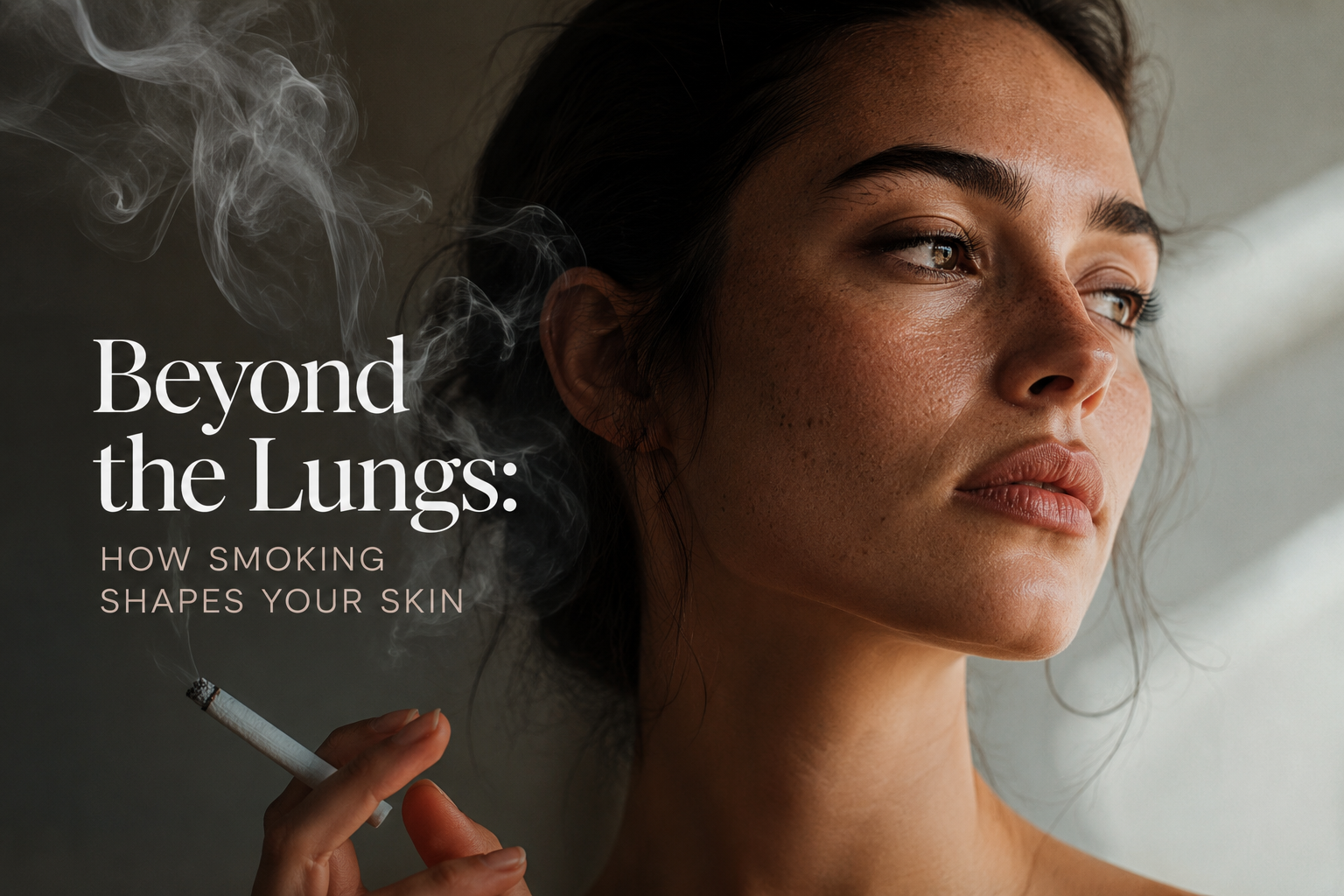
For years, smokers have heard the same promise:
“Quit smoking and your skin will thank you.”
It’s one of those statements that sounds believable, yet vague enough to raise questions.
What does it actually mean?
Will your wrinkles disappear? Will your skin suddenly glow? Will you wake up looking ten years younger?
Probably not.
But that doesn’t mean nothing happens.
The truth is more nuanced—and far more interesting.
The Question Most Smokers Secretly Ask
Whether they’ve been smoking for five years or twenty, many smokers eventually wonder about the same thing:
If I quit, will my skin actually improve?
It’s a fair question.
After all, we constantly hear about the damage smoking can cause. We see warnings about premature aging, wrinkles, dullness, and something often referred to as “smoker’s face.”
Yet very few people talk about what happens afterward.
Can the skin recover?
Or is the damage already done?
The answer lies somewhere in between.
What Smoking Really Does to the Skin
Most people associate smoking with lung and heart health. The effects on the skin are often overlooked.
Every cigarette exposes the body to thousands of chemicals, many of which increase oxidative stress. At the same time, nicotine narrows blood vessels, reducing the flow of oxygen and nutrients to the skin.
Over time, this can affect how the skin looks and functions.
The complexion may appear duller. The skin can become less resilient. Repair processes slow down, while collagen and elastin—the proteins responsible for firmness and elasticity—are placed under greater pressure.
None of this happens overnight.
And that’s precisely why many smokers don’t notice the gradual changes until years later.
The Biggest Myth: Your Skin Doesn’t Magically Recover
This is where expectations often become unrealistic.
Social media loves dramatic transformations. Before-and-after photos can make it seem as though quitting smoking triggers an instant skin revival.
Real life is usually less dramatic.
If smoking contributed to fine lines, collagen loss, uneven skin tone, or dehydration over many years, those changes won’t disappear within a few weeks.
Your skin has a history.
And it remembers.
Quitting smoking doesn’t erase the past. What it does do is remove a source of ongoing stress.
That distinction is important.
The First Change Isn’t What Most People Expect
Interestingly, former smokers rarely describe their first visible improvement as fewer wrinkles.
Instead, many notice something much harder to measure.
Their face simply looks less tired.
The skin often appears brighter and healthier. Some people describe their complexion as looking more alive. Others notice that their skin no longer has the same grey or dull undertone they had become used to seeing in the mirror.
These changes may sound subtle, but they can have a surprisingly big impact on overall appearance.
Sometimes it’s not about looking younger.
It’s about looking healthier.
What About the First Month?
This is usually the stage where expectations are highest.
People want to know whether they’ll see a difference after a few weeks.
The honest answer is: maybe.
Some individuals notice that their complexion looks fresher or more even. Others feel their skin becomes less dry or irritated.
For many people, however, the changes are gradual enough that they are difficult to notice day by day.
This doesn’t mean nothing is happening.
It simply means that skin recovery tends to be slower than social media would have us believe.
Where the Real Benefits Begin
The most meaningful changes often happen over months rather than weeks.
Once smoking is removed from the equation, the skin is no longer dealing with the same daily burden. It can focus more energy on normal maintenance and repair instead of constantly responding to stress.
Think of it this way.
Imagine trying to heal a small cut while repeatedly scratching it every day.
Healing becomes difficult.
Once the scratching stops, recovery doesn’t happen instantly—but it finally becomes possible.
The same principle applies to the skin.
Can Quitting Smoking Reverse Aging?
This is probably the most important question.
And the answer is both encouraging and realistic.
No, quitting smoking will not erase deep wrinkles. It will not restore every bit of collagen that has been lost over the years. It will not reverse decades of sun exposure or lifestyle choices.
But it can help slow further damage.
And that matters more than many people realize.
Because skincare is rarely about turning back the clock. More often, it’s about preserving skin health and preventing future decline.
In that sense, quitting smoking may be one of the most effective long-term skincare decisions a person can make.
The Unexpected Factor Nobody Talks About
There is another reason former smokers often report better-looking skin.
When people quit smoking, they frequently make other positive changes at the same time.
They may sleep better. They may become more active. They may drink more water, improve their diet, or pay more attention to their skincare routine.
As a result, the visible improvement isn’t always caused by one single factor.
It’s often the combined effect of several healthier habits working together.
And perhaps that’s exactly the point.
So, Does Your Skin Really Change?
Yes.
But probably not in the dramatic way social media promises.
The changes are often quieter than that.
Your skin may gradually appear brighter. It may look healthier, more balanced, and less fatigued. Recovery processes can function more effectively, and future damage may slow down.
The biggest skincare benefit of quitting smoking isn’t that your skin suddenly becomes perfect.
It’s that your skin finally gets a chance to stop fighting and start recovering.
And that may be more valuable than any serum sitting on your bathroom shelf.
Sources
- American Academy of Dermatology (AAD)
- National Health Service (NHS)
- Mayo Clinic
- Cleveland Clinic
- Skin Cancer Foundation
- Published dermatology research on smoking, skin aging, collagen degradation, and oxidative stress