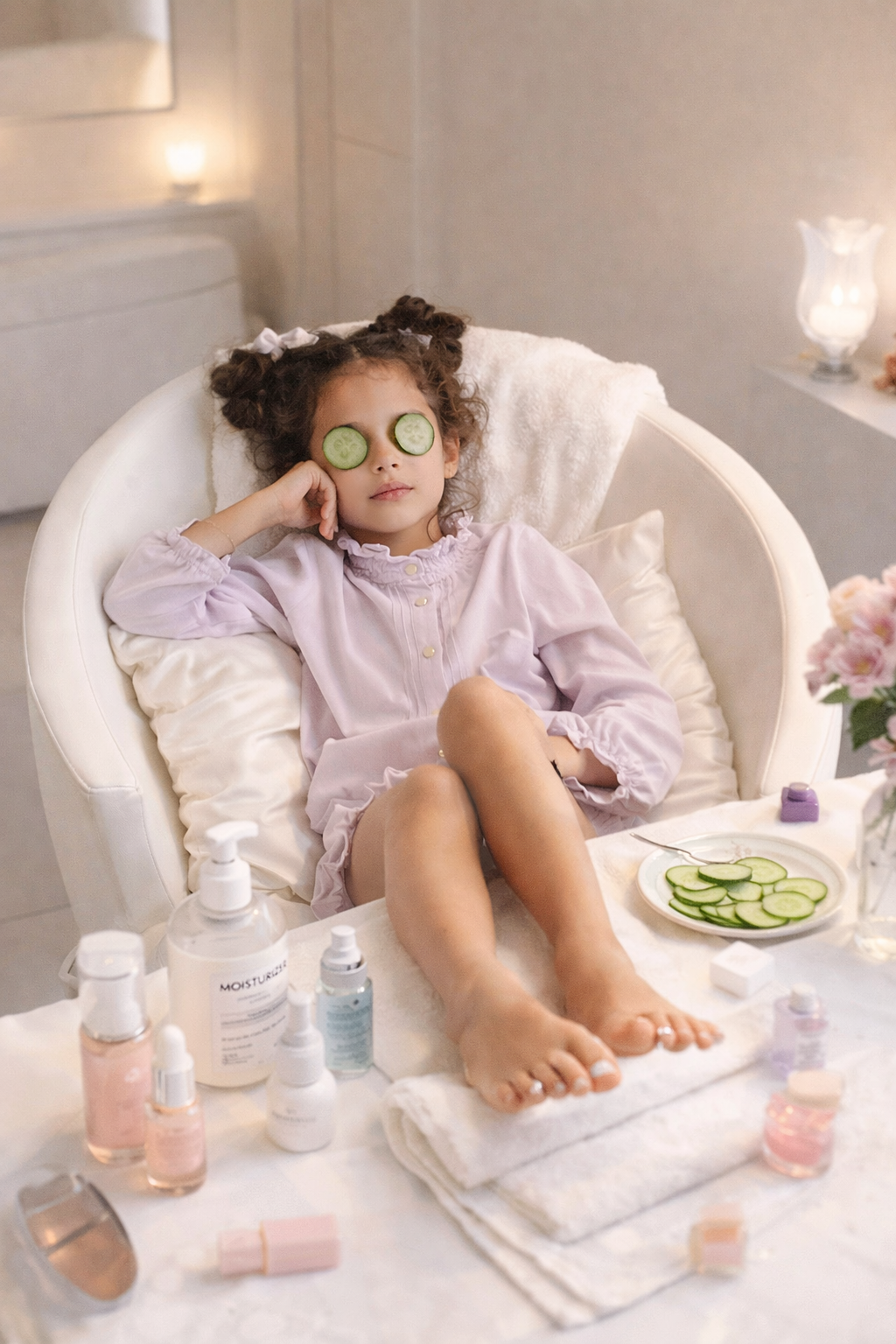
Not long ago, skincare was something you discovered in your late teens — or even later.
Today, that timeline is shifting.
Scroll through TikTok or walk into a beauty store, and you’ll notice something unexpected: children, often no older than ten or twelve, browsing serums, testing products, and building routines that look surprisingly advanced.
This is Gen Alpha — and they’re entering the world of skincare earlier than any generation before them.
A Generation Raised on Beauty Content
Gen Alpha is the first generation to grow up fully immersed in digital content. Platforms like TikTok and YouTube aren’t just entertainment — they’re a constant stream of recommendations, routines, and product reviews.
As a result, skincare is no longer something discovered gradually. It’s introduced early, often through influencers and viral trends.
A “routine” is no longer basic cleansing and moisturizing. For many, it already includes multiple steps, trending products, and ingredients that were once reserved for adult skin.
When Skincare Becomes Too Much, Too Soon
At first glance, an interest in skincare might seem harmless — even positive. After all, learning to take care of your skin early on sounds like a good habit.
However, the reality is more complex.
Dermatologists have increasingly raised concerns about the use of active ingredients on young, developing skin. Products containing retinoids, exfoliating acids, or strong treatments are now part of routines that were never designed for this age group.
Unlike adult skin, younger skin typically has a strong natural barrier and faster renewal cycle. It doesn’t need aggressive intervention. In fact, introducing too many actives too early can lead to irritation, sensitivity, and long-term imbalance.
In trying to “improve” their skin, many are unintentionally damaging it.
The Influence of “Sephora Kids”
One of the clearest examples of this shift is what has been widely referred to online as “Sephora kids.”
Videos showing pre-teens shopping for high-end skincare brands have gone viral, sparking both fascination and concern. Products from brands like Drunk Elephant or Glow Recipe — originally designed for specific skin concerns — are now being used without context or necessity.
The issue isn’t just the products themselves, but the way they are used. Without proper understanding, skincare becomes less about care and more about imitation.
Where the Industry Fits In
As expected, the industry is already adapting.
New brands are emerging with products specifically targeted at younger audiences, often positioned as “gentle” or “age-appropriate.” At the same time, existing brands benefit from increased visibility among younger consumers.
This raises an important question:
Is the industry responding to a need — or creating one?
The line between education and marketing is becoming increasingly blurred.
What Young Skin Actually Needs
Despite the complexity of modern skincare, the needs of young skin remain relatively simple.
A basic routine focused on cleansing, hydration, and sun protection is, in most cases, entirely sufficient. There is no need for multiple active ingredients or advanced treatments.
In fact, simplicity is not a limitation — it is often the most effective approach.
A Shift Worth Paying Attention To
The rise of Gen Alpha skincare reflects a broader change in how beauty is consumed.
Skincare is no longer just about skin. It’s about identity, self-expression, and participation in a wider cultural conversation. For younger audiences, it becomes part of how they engage with the world around them.
However, as this shift continues, it also raises questions about boundaries, education, and responsibility — both for consumers and for the industry itself.
Starting skincare earlier isn’t necessarily the problem.
The real question is how early — and how much.
Because when routines become more complex than necessary,
care can quickly turn into overcorrection.
And for skin that is still developing, that difference matters.
AI in Dermatology: The Problem No One Talks About