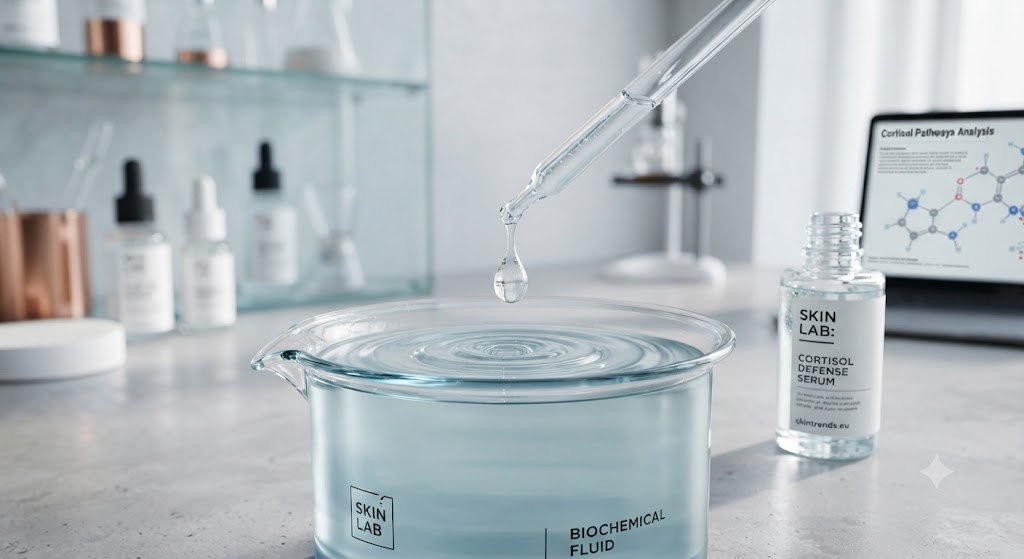
We have all been there: after a grueling week of deadlines, poor sleep, and endless coffee, you catch your reflection in the mirror. Your skin looks lackluster, dehydrated, slightly puffy, and perhaps a bit more sensitive than usual. You reach for your most expensive serum, expecting a miracle, but the result remains… underwhelming.
Welcome to the phenomenon of “Cortisol Face.” While it sounds like another viral marketing term, the biological connection between your stress levels and your skin’s appearance is very real. But why is it that even the most premium skincare often fails to correct it?
The Biology of a Stressed Complexion
To understand why topical products struggle to combat stress-related aging, we have to look at the skin-brain axis. When you are under chronic stress, your adrenal glands release cortisol, the body’s primary stress hormone. While cortisol is useful in short bursts, chronic elevation is a nightmare for your skin.
- Collagen Breakdown: Elevated cortisol levels stimulate the production of enzymes that degrade collagen and elastin—the very proteins responsible for keeping your skin firm and youthful.
- Inflammation: Cortisol triggers systemic inflammation, which can manifest as redness, puffiness, and even flares of acne or rosacea, even in people who don’t usually struggle with breakouts.
- Barrier Compromise: Stress “switches off” your skin’s ability to retain moisture. It impairs the synthesis of ceramides and essential lipids, leaving your moisture barrier porous and prone to dehydration.
The Trap: Why Your Serums Aren’t Delivering
The beauty industry loves to sell us solutions in a jar. We are told that a luxury serum containing gold flakes, rare caviar, or proprietary peptides will “rejuvenate” our tired faces.
However, there is a fundamental limitation here: You cannot “topically” solve a systemic hormone imbalance. If cortisol is signaling your skin to stop repairing itself, applying a serum—no matter how luxurious—is like trying to put out a forest fire with a glass of water. These products can offer temporary surface-level hydration or soothing effects, but they cannot address the biological signal of stress that is actively breaking down your skin structure from within.
How to Actually Manage “Cortisol Face”
If you want to combat stress-induced aging, you need a dual approach: topical support + systemic management.
1. Focus on Barrier Repair (Topical Strategy) When your skin is stressed, stop over-exfoliating. Focus on ingredients that mimic and strengthen your natural skin barrier:
- Ceramides: The “mortar” that holds your skin cells together.
- Centella Asiatica (Cica): Excellent for calming stress-induced inflammation.
- Niacinamide: Helps improve barrier function and reduce the visible effects of inflammation.
2. Manage the Source (The “SkinTrends” Approach) If you want real results, you have to lower your cortisol levels. Science suggests that even small, consistent interventions make a difference:
- Magnesium: Often depleted by stress, it is vital for both skin health and regulating the nervous system.
- The 10-Minute Reset: Research shows that just 10 minutes of controlled breathing or a quiet walk significantly lowers cortisol markers in the blood.
- Sleep Hygiene: Your skin’s repair mode is most active during deep sleep. If stress is cutting your sleep short, no serum can make up for that lost time.
The Verdict
“Cortisol Face” is a reminder that beauty is not just skin deep; it is a reflection of your body’s overall state. While a high-quality skincare routine is essential for maintaining health, it is not a cure-all for a lifestyle that keeps your stress hormones permanently peaked.
Don’t let the marketing convince you that another jar of cream will fix what your nervous system is signaling. True “glow” starts with an informed routine, but it’s sustained by a body in balance.
Niacinamide Before and After: What It Really Does to Your Skin