
Every night, your skin spends around one-third of the day in close contact with the same surface.
Over the course of a year, that’s more than 2,500 hours.
It’s one of the longest and most consistent contacts your skin has with anything, so it’s only natural to wonder whether your pillowcase can actually influence your skin.
The short answer?
Yes—but probably not in the way you’ve been told.
Social media is full of bold claims. Some posts promise that switching to a silk pillowcase will prevent wrinkles. Others suggest that an unwashed pillowcase is the hidden cause of acne.
The reality is much less dramatic—and much more interesting.
What Happens to Your Skin While You Sleep?
Although it may not look like much is happening while you’re asleep, your skin remains surprisingly active throughout the night.
Your skin barrier continues repairing itself after a long day of exposure to sunlight, pollution and dry indoor air. Skin cells keep renewing, water is gradually lost through the skin in a natural process called transepidermal water loss, and your sebaceous glands continue producing oil.
In other words, your skin doesn’t simply “switch off” when you go to bed.
During all of this, your face rests against the same piece of fabric for several hours. That doesn’t automatically make your pillowcase a skincare concern—but it does explain why it deserves a closer look.
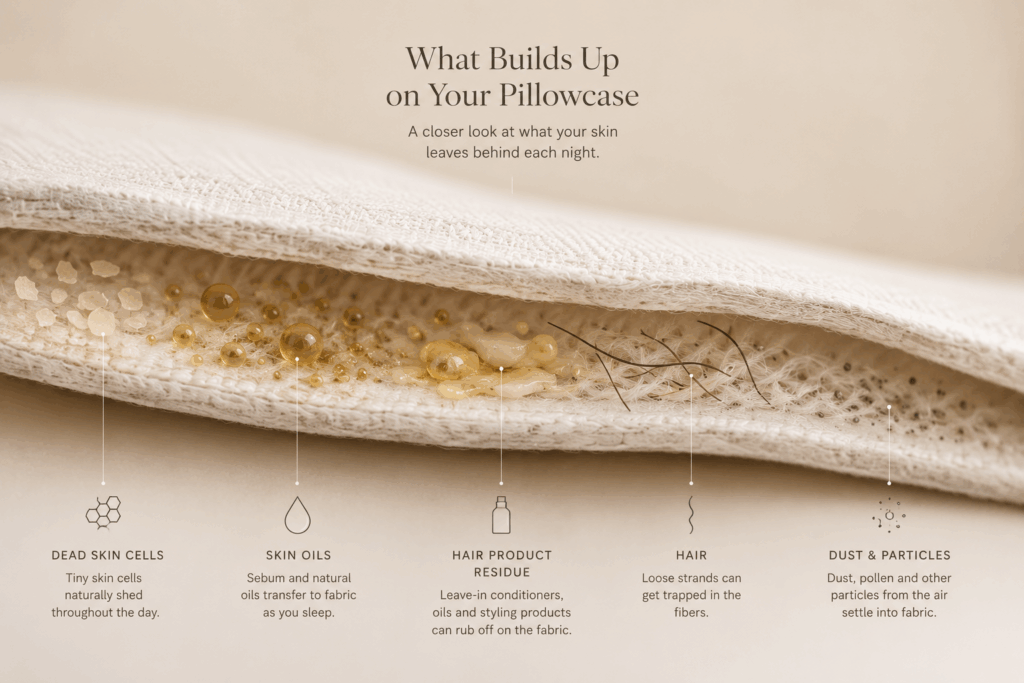
What Actually Builds Up on a Pillowcase?
Even if you go to bed with freshly cleansed skin, your pillowcase doesn’t stay perfectly clean for long.
As you sleep, small amounts of natural skin oils, sweat and dead skin cells are transferred to the fabric. If you’ve applied a night cream or moisturizer, tiny traces of those products can also end up on the pillowcase. Hair products, especially leave-in conditioners, oils or styling creams, may contribute as well if your hair comes into contact with your face during the night.
None of this is unusual.
It’s simply part of everyday life.
The important question isn’t whether these substances are present—they almost always are. The question is whether they actually affect your skin in a meaningful way.
Can a Pillowcase Cause Acne?
This is probably the biggest myth surrounding pillowcases.
Current scientific evidence doesn’t support the idea that pillowcases directly cause acne.
Acne is a complex condition influenced by hormones, genetics, inflammation, oil production and changes within the hair follicle. No study has shown that sleeping on a pillowcase, even one that isn’t perfectly fresh, is enough to create acne on its own.
That said, your pillowcase isn’t completely irrelevant either.
If you have oily or acne-prone skin, sleep with heavy hair products, sweat during the night or rarely change your pillowcase, all of those factors together may create an environment that isn’t particularly friendly for already sensitive skin.
In other words, a clean pillowcase isn’t a treatment for acne—but it can be one small part of good skincare habits.
Does Silk Really Make a Difference?
Silk pillowcases have become incredibly popular over the past few years, often advertised as a simple way to prevent wrinkles and improve skin.
The science is a little more modest.
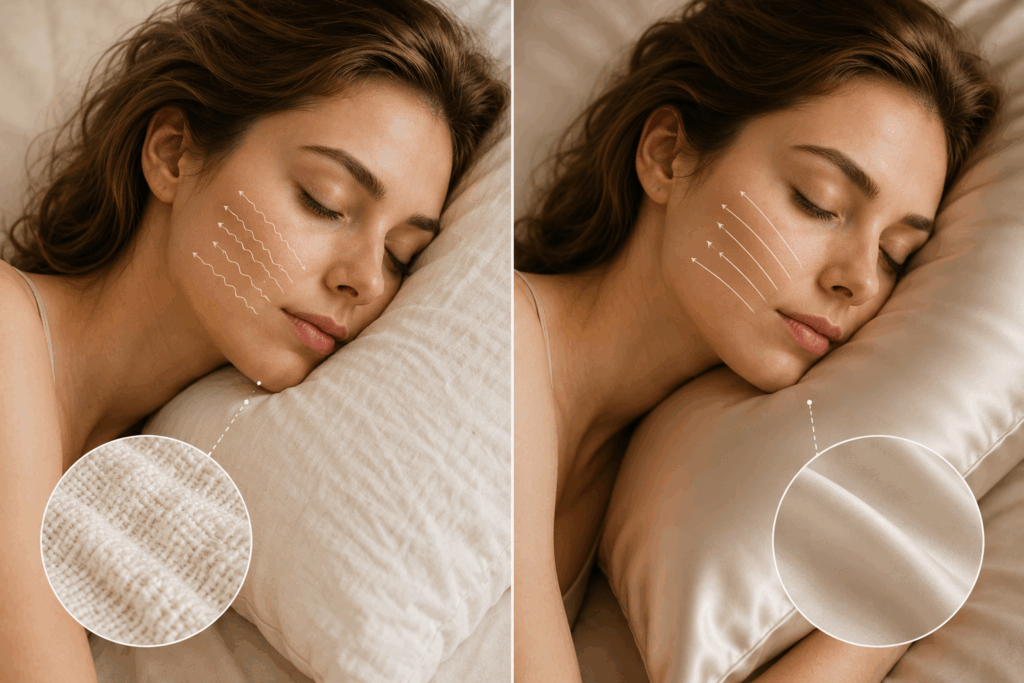
Silk has a smoother surface than many cotton fabrics, which means it creates less friction as your face moves against the pillow during the night. For people with very sensitive skin, eczema or certain skin conditions, that reduced friction may simply feel more comfortable.
What silk has not been proven to do is erase wrinkles, stop skin ageing or magically transform your complexion.
A silk pillowcase may be a nice luxury if you enjoy it, but it isn’t a replacement for sunscreen, a consistent skincare routine or healthy lifestyle habits.
Small Habits That Actually Matter
If you’re looking for practical ways to support your skin, you don’t need expensive bedding or complicated routines.
Washing your pillowcase regularly is a sensible place to start, especially if your skin tends to be oily or you use leave-in hair products.
Cleansing your face before bed removes makeup, sunscreen and the day’s build-up before they have hours of contact with your skin.
If your skin is easily irritated, using a gentle fragrance-free laundry detergent may also help reduce unnecessary irritation.
These aren’t dramatic changes, but skincare rarely depends on dramatic changes.
More often, it’s the small habits repeated consistently that make the biggest difference over time.
Your pillowcase isn’t a skincare product.
It won’t cure acne.
It won’t erase wrinkles.
But because your skin spends thousands of hours against it every year, keeping it clean is one of those simple habits that quietly supports healthier skin.
It may never become the most important part of your skincare routine—and it doesn’t need to be.
Sometimes, looking after your skin is less about finding the next miracle product and more about paying attention to the ordinary things you come into contact with every single day.
Read More: Inside the Science of Red Light Therapy Masks