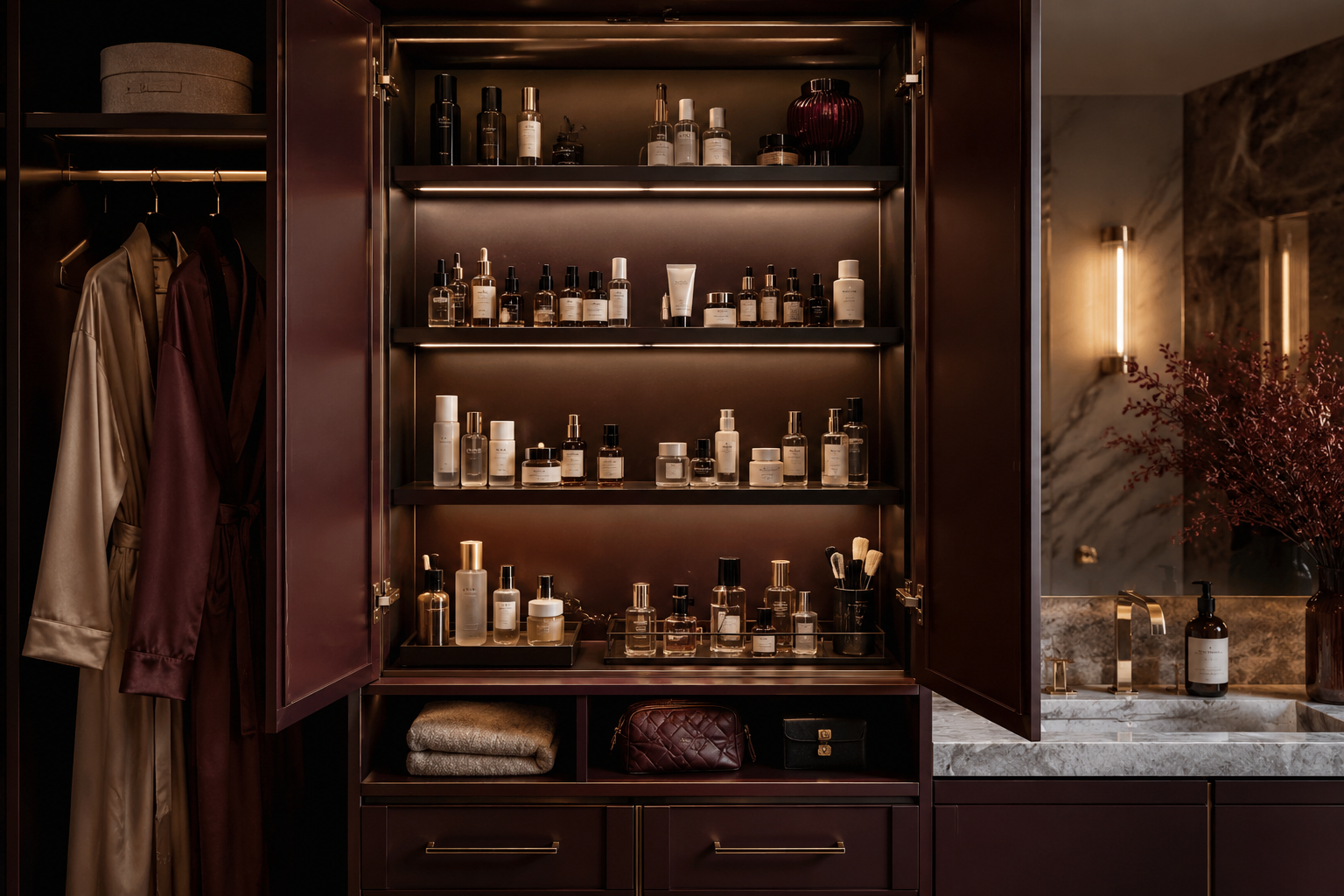
There was a time when a skincare routine could fit comfortably into one corner of the bathroom: cleanser, moisturizer, perhaps a toner and something for the occasional breakout. Today, the bathroom shelf tells a different story. Serums stand in rows, essences and mists compete for space, and there is often at least one product we bought with great enthusiasm and quietly stopped using three weeks later.
And yet, somehow, a new serum can still feel necessary.
It is not so different from standing in front of a wardrobe full of clothes and declaring that there is nothing to wear. We may have reached a point where skincare is no longer simply something we use. It is also something we collect, display, experiment with and occasionally buy simply because we want something new.
We Don’t Shop for Skincare Only When We Need It
Most of us don’t wait until our last pair of jeans falls apart before buying another one. Fashion has always been partly functional and partly emotional. We buy clothes because the season changes, because our taste changes, because something catches our eye or because a new piece makes an old wardrobe feel different.
Skincare is beginning to work in much the same way.
Your moisturizer may be doing its job perfectly well. Then you see a beautifully packaged milky toner, a new peptide mist or a serum with a texture that looks irresistible on screen. Twenty minutes ago, you had never considered owning it. Now your bathroom shelf seems strangely incomplete without it.
That doesn’t necessarily make the purchase foolish. It simply means that the line between need and want has become much less clear in skincare than the language of beauty marketing often suggests.
Beauty Has Learned the Power of the Object
Part of the change is physical. Skincare packaging has become extraordinarily good at making products feel desirable before they ever touch the skin.
The bottle matters. The weight of the jar matters. The dropper, the color, the texture and even the satisfying click of a cap can become part of the experience. Products are designed not only to work in a bathroom but to look good there.
Social media made this even more powerful. We now encounter skincare through perfectly arranged shelves, unboxings, close-ups of glossy textures and aesthetically choreographed routines. A product can become familiar before we know what it does.
There is even a word for displaying a beautiful collection of beauty products: the shelfie. That alone says something about how far the bathroom shelf has travelled from being simple storage.
Skincare Now Has Its Own Fashion Cycle
The comparison with the wardrobe goes deeper than packaging. Skincare increasingly operates through trends.
Fashion has seasonal silhouettes and colors; beauty has ingredients and textures of the moment. One year everyone is talking about retinoids, another about barrier repair, peptides, PDRN or some newly rediscovered ingredient. Then come the formats: cleansing balms, sleeping masks, skin milks, jelly mists, ampoules.
Not all of these are empty inventions. New formulations can be useful, and different skin genuinely has different needs. But our skin has not suddenly developed dozens of new biological requirements.
What has changed is the market around it.
Beauty has become exceptionally good at creating new reasons to be curious. Instead of waiting until a product runs out, we are encouraged to discover what might come next. That is much closer to the logic of fashion than to the old idea of toiletries.
The Rise of the Small Luxury
There is another reason the bathroom shelf fills up so easily: skincare offers novelty at a relatively accessible scale.
A new wardrobe, handbag or piece of furniture can require serious thought and money. A face mist or serum can provide a smaller version of the same emotional reward. There is the anticipation, the package arriving, the first use and the tiny pleasure of putting something new beside the sink.
Economists and marketers sometimes describe products like lipstick as an “affordable luxury”: a smaller indulgence that can still provide the feeling of treating yourself. Modern skincare fits remarkably well into that territory.
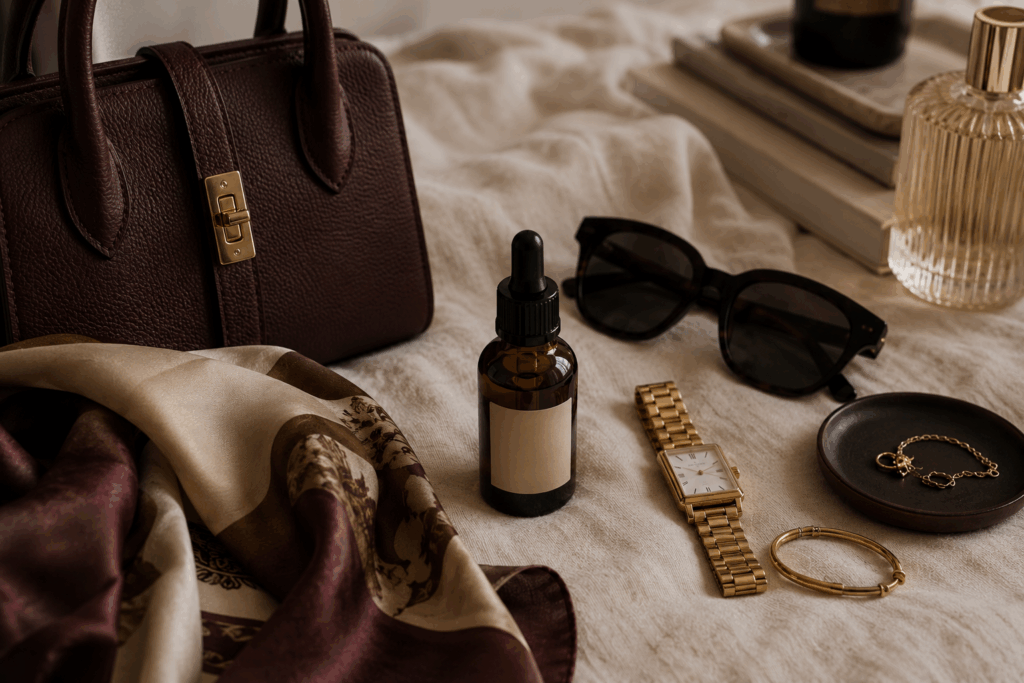
And unlike an outfit, it is woven into a ritual we repeat every day. The pleasure isn’t necessarily only in owning the product. It can be in opening it, applying it and having five quiet minutes that feel deliberately ours.
That is worth acknowledging, because otherwise the conversation becomes too simplistic. A bathroom full of skincare isn’t automatically evidence that someone has been manipulated into buying things they don’t need. Beauty can be a hobby. Experimenting can be enjoyable. A beautiful object can simply be a beautiful object.
When a Routine Becomes a Collection
The interesting question comes when we stop looking at what we own and look at what we actually use.
Most routines eventually reveal their favorites. The cleanser we automatically reach for. The moisturizer we replace before it runs out. The SPF that lives beside the door. Around them may sit products that were exciting for a week, products waiting for the “right occasion,” and products we are determined to finish largely because we paid for them.
That is probably the clearest difference between a routine and a collection. A routine is defined by repetition. A collection is defined by possession.
There is nothing inherently wrong with either. But knowing which one we are building can make our relationship with skincare a little more intentional.
Perhaps the bathroom shelf really has become the new wardrobe: part necessity, part self-expression, part trend cycle and part simple pleasure.
And just like the wardrobe, it can be completely full while somehow convincing us there is still one thing missing.