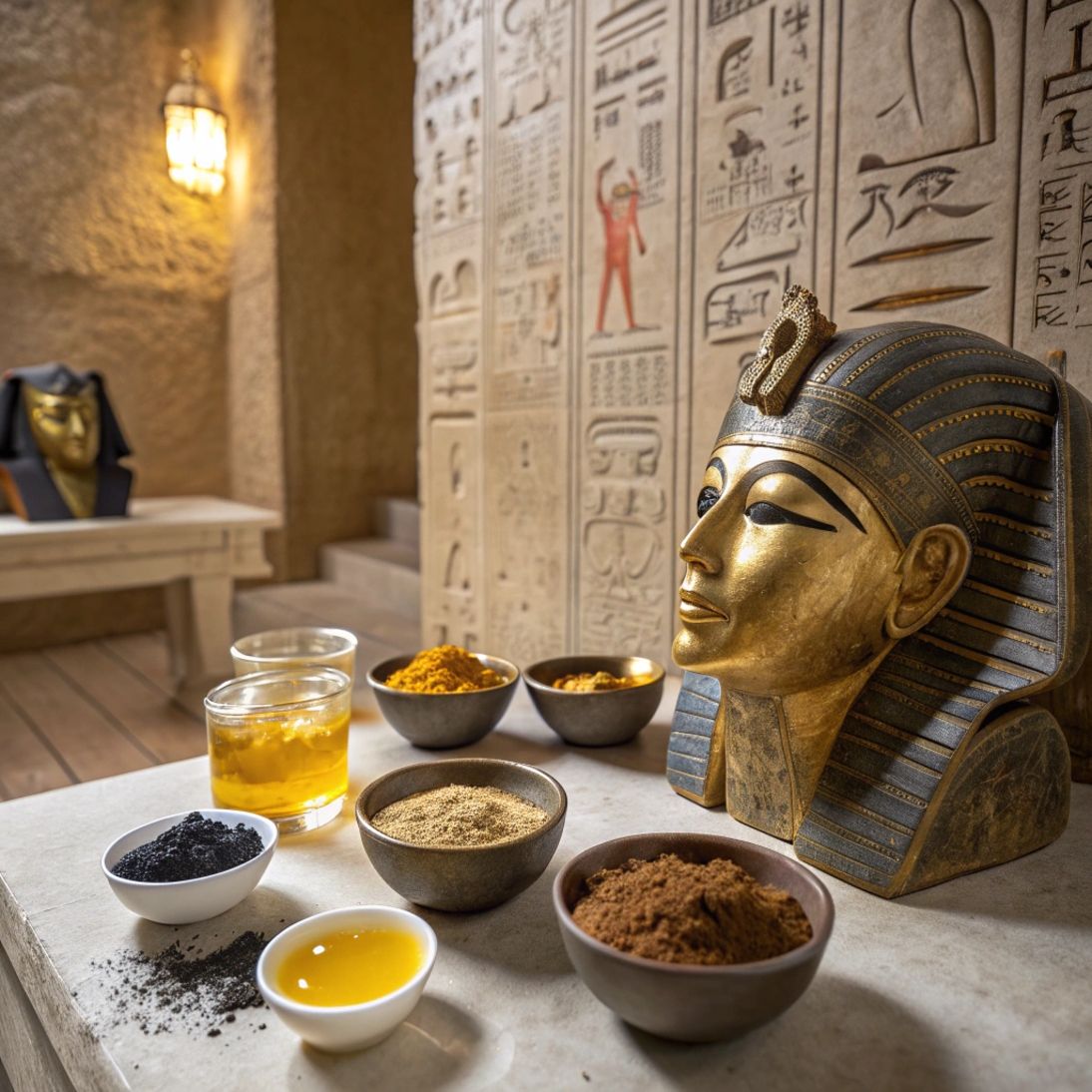
Imagine walking through the streets of Ancient Egypt more than 3,000 years ago. The air is warm, the desert sun is relentless, and the scent of fragrant oils fills the markets. Around you, both women and men line their eyes with dark kohl, protect their skin with precious oils, and carry polished bronze mirrors. Beauty wasn’t simply about appearance—it was woven into daily life.
When people think of ancient Egyptian beauty, one image usually comes to mind: Cleopatra bathing in milk. While this famous story has become part of popular culture, the real skincare traditions of Ancient Egypt were far more fascinating.
Long before modern laboratories and skincare brands existed, Egyptians had already developed beauty rituals that combined nature, observation, and practicality. Surprisingly, some of those traditions have survived for thousands of years and still influence skincare today.
Beauty Was Part of Everyday Life
For the ancient Egyptians, skincare wasn’t a luxury reserved for queens or the wealthy.
The environment demanded it.
The intense sun, dry desert air, and constant wind could quickly leave the skin dehydrated and irritated. Protecting the skin became part of everyday life, much like wearing sunscreen today.
People relied on ingredients that were available around them. They experimented, observed results, and passed their knowledge from one generation to the next.
Over time, these simple practices became part of Egyptian culture.
The Mystery Behind the Black Eyes
One of the most recognizable features of Ancient Egypt is the dramatic black eye makeup seen on statues, paintings, and mummies.
Most people assume it was purely decorative.
In reality, it served several purposes.
The dark mineral-based eyeliner, known today as kohl, helped reduce the glare of the powerful desert sun. It also offered some protection from windblown sand and dust. Ancient Egyptians even believed it protected the eyes from illness and evil spirits.
Interestingly, modern scientific research suggests that some mineral compounds used in ancient kohl could stimulate certain natural immune responses in the skin. However, historians also know that some historical formulas contained lead-based compounds, which would not meet today’s safety standards.
It is a remarkable example of how observation sometimes led ancient civilizations surprisingly close to scientific understanding.
Nature Was Their Skincare Laboratory
Instead of shelves filled with creams and serums, ancient Egyptians turned to nature.
Plant oils were among their most valuable beauty products. They used oils not simply to soften the skin, but to create a protective barrier against heat, dryness, and harsh environmental conditions.
Honey was another treasured ingredient.
Today we know honey for its moisturizing and antimicrobial properties. Ancient Egyptians valued it for many of the same practical reasons. It was applied to dry skin, minor wounds, and rough areas because they noticed it helped the skin recover.
Clay also played an important role.
Without understanding modern dermatology, they discovered that natural clay could leave the skin feeling cleaner and less oily. Thousands of years later, clay masks remain one of the most popular treatments for oily and combination skin.
Beauty Was Never Just for Women
One of the biggest misconceptions about Ancient Egypt is that beauty rituals belonged only to women.
They didn’t.
Men also cared for their appearance.
They applied oils to their skin, wore perfumes, lined their eyes with kohl, and paid attention to grooming. Looking clean and well cared for was associated with health, status, and respect.
In many ways, skincare was considered part of daily hygiene rather than a beauty trend.
Fragrance Was a Daily Ritual
Ancient Egyptians loved fragrance.
Instead of alcohol-based perfumes, they preferred scented oils made from flowers, herbs, resins, and precious botanicals.
Lotus, myrrh, frankincense, and jasmine were among the most prized aromas.
Historical records and artwork also suggest that during special celebrations, some wealthy Egyptians wore scented wax cones on their heads. As the wax slowly softened in the heat, it released pleasant fragrances throughout the day.
Whether used every day or mainly during ceremonies, fragrance was deeply connected to both beauty and spirituality.
More Than Three Thousand Years Later
Modern Egypt looks very different from the world of the pharaohs.
Today’s skincare is supported by dermatological research, advanced formulations, and strict safety standards.
Yet some ancient traditions remain surprisingly familiar.
Natural oils are still widely used in many Egyptian households. Honey continues to appear in homemade face masks. Rose water remains a popular way to refresh the skin, while aromatic oils can still be found in traditional markets throughout the country.
Even traditional hammams continue to offer rituals based on cleansing, steam, exfoliation, and massage.
The products have changed.
The science has evolved.
But the idea behind many of these rituals has remained the same for thousands of years.
A Legacy That Still Inspires Modern Skincare
Ancient Egyptian beauty rituals were never about chasing perfection.
They were about protecting the skin, respecting nature, and making the most of the ingredients people had around them.
Perhaps that is why their influence has lasted for so long.
Some skincare trends disappear after a season.
Others survive for thousands of years.
Ancient Egypt reminds us that while beauty continues to evolve, the simplest rituals are often the ones that stand the test of time.
The World’s Most Expensive Skincare Ingredients
Very good article!!! Keep going!
Nex maybe we can take us to Bulgaria. xoxo