The Beauty Industry May Be Leaving One of Its Oldest Marketing Strategies Behind
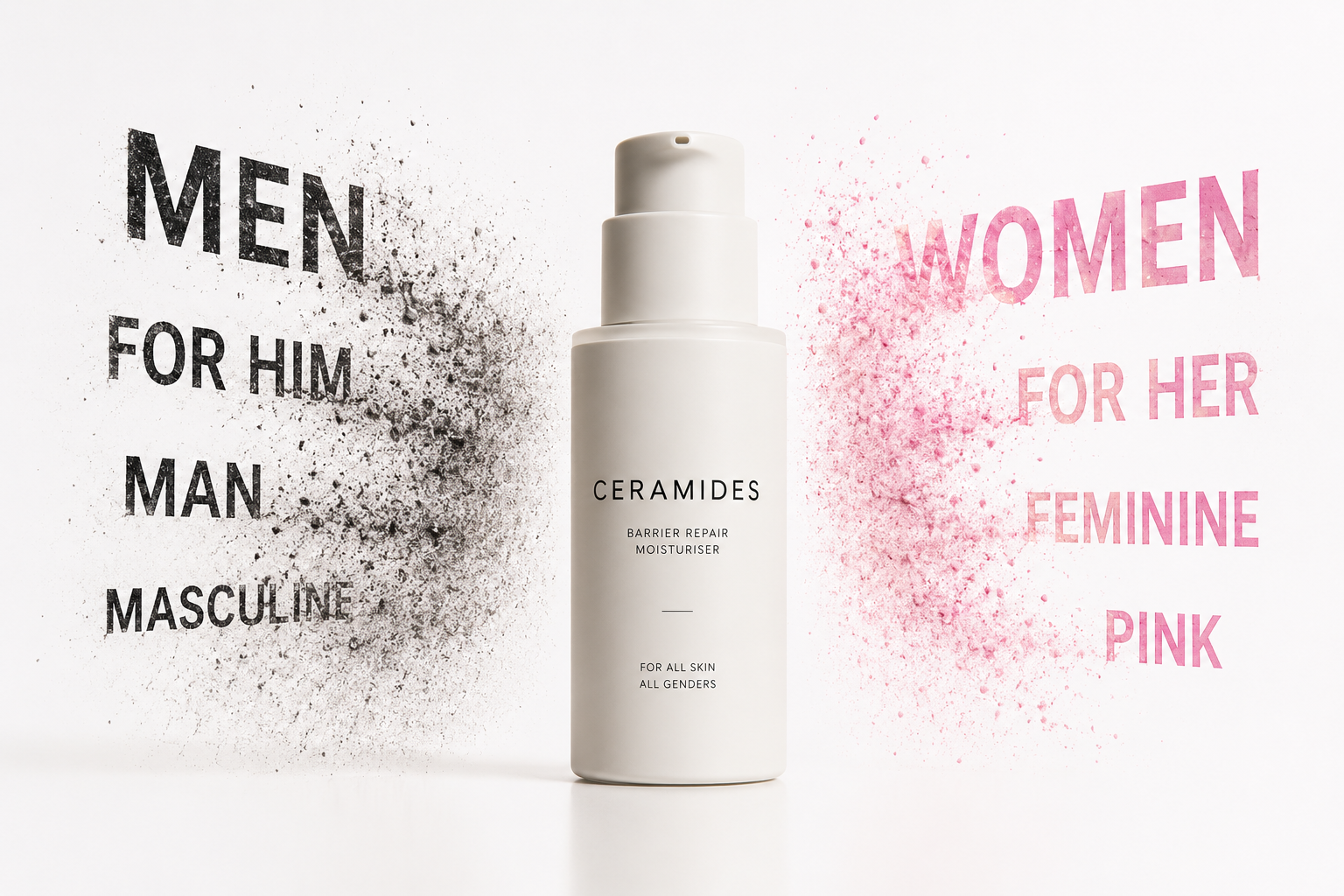
For years, the beauty industry was built around a simple idea: men and women needed different products.
The distinction was everywhere. Women’s skincare came in elegant white or pastel packaging, often promising radiance, hydration or anti-aging benefits. Men’s products, on the other hand, were usually black, dark blue or grey, with names that emphasised power, freshness or control. Even before consumers read the ingredients, they already knew who the product was supposed to be for.
That approach shaped the industry for decades. It also fuelled one of its most controversial debates.
When people started noticing that products marketed to women often appeared more expensive than nearly identical versions marketed to men, the phenomenon became widely known as the Pink Tax. Although it was never an actual tax, the term quickly entered public discussion, raising questions about whether women were paying more simply because a product was wrapped in pink packaging.
Razors became the symbol of that debate. Two products could look almost identical, perform the same function and even contain similar materials, yet one would be marketed to women and sold at a higher price. Soon, the discussion expanded to deodorants, body washes, shampoos and countless other personal care products.
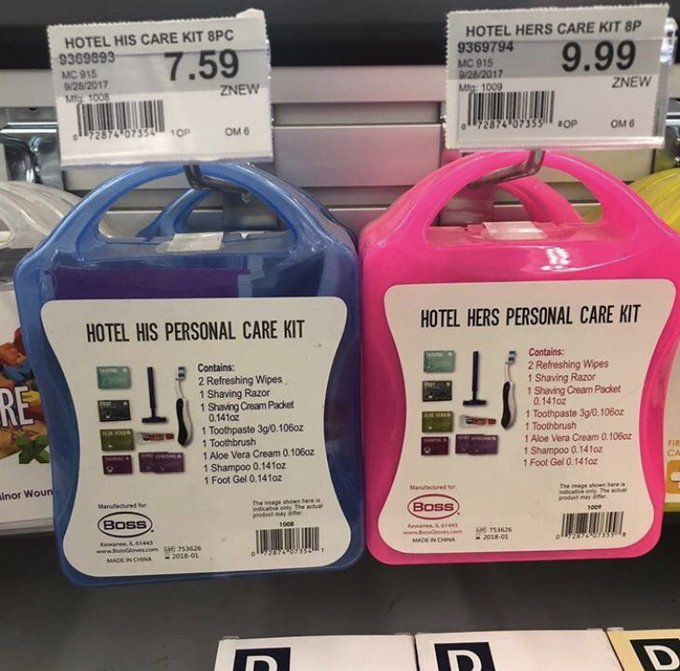
Whether every comparison was fair is still debated today. More recent research suggests that pricing differences are often more complex than they first appear. Yet focusing only on the price may have distracted us from a much bigger transformation that has quietly reshaped modern skincare.
Because while consumers were asking whether women’s products cost more, many of the industry’s most influential skincare brands were slowly moving away from gender-based marketing altogether.
From Selling Gender to Selling Solutions
Take a look at some of today’s most recognisable skincare brands.
CeraVe.
The Ordinary.
Paula’s Choice.
Geek & Gorgeous.
What do they have in common?
Surprisingly little attention is given to gender.
Instead of telling customers whether a product is made for men or women, they tell them exactly what the formula is designed to do. A cleanser is developed for oily skin. A moisturiser focuses on restoring the skin barrier. A serum contains niacinamide, peptides or vitamin C because those ingredients address a specific skin concern—not because they belong to one gender.
It is a subtle change, but an important one.
Ten or fifteen years ago, many consumers started their shopping journey by asking, “Where is the men’s section?” Today, they are far more likely to ask, “Which cleanser is best for sensitive skin?” or “Which ingredient helps with pigmentation?”
That shift says a lot about how the relationship between consumers and skincare has evolved.
People are becoming increasingly familiar with active ingredients, formulation science and skin biology. They compare percentages of niacinamide, look for ceramides or peptides and read ingredient lists before making a purchase. In other words, they are learning to buy products based on what their skin needs rather than how the packaging describes them.
Perhaps the most interesting part is that this transformation happened almost without anyone noticing.
There was no major campaign announcing that skincare had become gender-neutral. No single company declared the end of products “for men” or “for women.”
The labels simply became quieter.
Little by little, they stopped talking about the person holding the bottle and started talking about the skin beneath it.
The Business Behind the Shift
The move towards gender-neutral skincare is often presented as a cultural change, but there is another side to the story that receives far less attention.
It also makes business sense.
For decades, many beauty companies developed separate product lines for men and women. Even when the formulas were remarkably similar, almost everything else had to be duplicated. Different packaging, different branding, different advertising campaigns, different retail displays and, in many cases, entirely separate product ranges.
Maintaining two identities for products designed to solve the same skin concern is expensive.
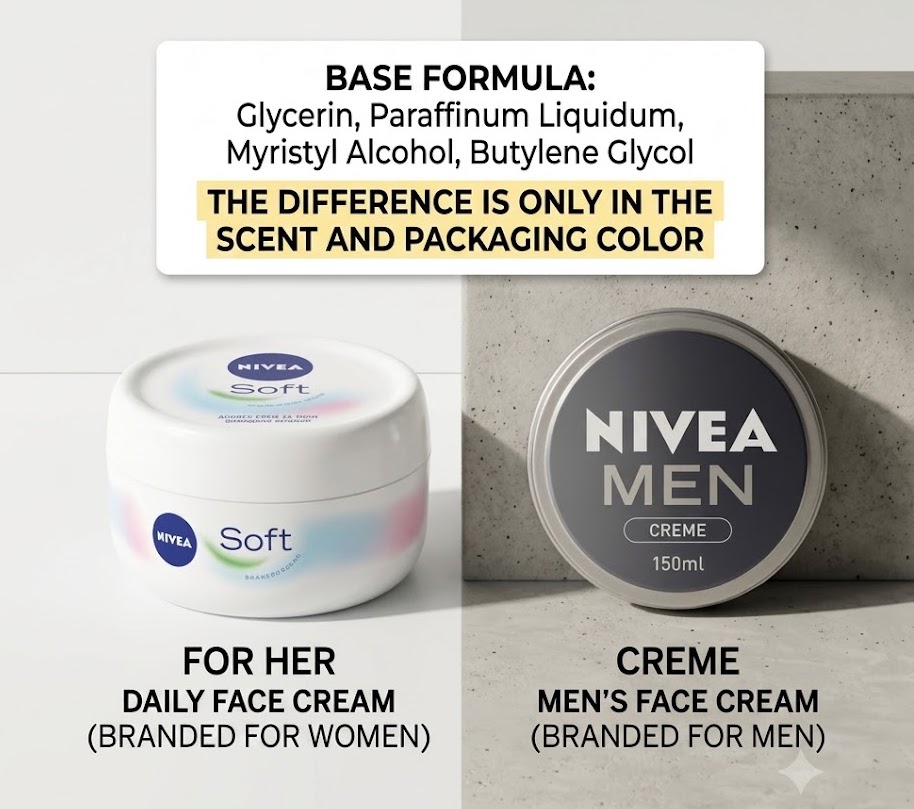
A single moisturiser marketed to everyone is easier to manufacture, easier to stock, easier to promote and easier for retailers to display. It also allows brands to reach a much larger audience without creating multiple versions of essentially the same product.
This does not mean every men’s product and every women’s product have always been identical. Many products are genuinely formulated differently, particularly in categories such as shaving or beard care.
However, when the goal is simply to hydrate the skin, strengthen the skin barrier or reduce pigmentation, creating separate identities for each gender becomes increasingly difficult to justify.
Consumers Have Changed Faster Than Marketing
Another reason behind this transformation is that consumers have become far more knowledgeable than they used to be.
Ten years ago, many people chose skincare based on the promises printed on the front of the packaging.
Today, they often turn the bottle around.
They read the ingredient list and comare concentrations.
They search for ceramides, peptides, niacinamide or azelaic acid long before they decide whether they like the packaging.
Social media has accelerated that change. Thousands of dermatologists, cosmetic chemists and skincare educators now explain ingredients in a way that was almost impossible to access a decade ago.
As a result, many consumers have started thinking less about whether a product is marketed to men or women and more about whether it is suitable for dry skin, acne, rosacea or hyperpigmentation.
In many ways, skincare has become less about identity and more about biology.
The Pink Tax Debate Isn’t Over—But the Industry Is Moving On
The discussion around the Pink Tax will probably continue for years.
Consumers should absolutely question pricing when two products appear almost identical but carry noticeably different price tags simply because they are marketed to different audiences.
Transparency benefits everyone.
At the same time, focusing only on pricing risks overlooking a much bigger transformation.
Some of the most influential skincare brands today are no longer trying to convince consumers that men need one moisturiser and women another.
Instead, they are asking a different question.
What does this skin actually need?
That small shift changes everything.
The conversation moves away from gender and towards skin concerns.
Away from stereotypes and towards formulations.
Away from colour-coded packaging and towards ingredients supported by science.
A New Chapter for Skincare
Perhaps the future of skincare will not be defined by whether products become completely gender-neutral. There will always be categories where gender-specific products make sense, and there will always be brands that choose to market them that way.
What is changing is something much more subtle.
The industry’s most innovative brands are increasingly treating skin as skin.
Instead of creating separate stories for men and women, they are building products around hydration, barrier repair, sun protection, pigmentation and healthy skin function.
Ironically, the biggest legacy of the Pink Tax debate may not be lower prices or different regulations.
It may simply be that it encouraged consumers to look beyond the colour of the bottle and start asking better questions.
Not “Who is this product marketed to?”
But “Does this formulation actually make sense for my skin?”
That may be the most important shift the skincare industry has made in years.
The Evolution of Men’s Skincare Over the Last Decade