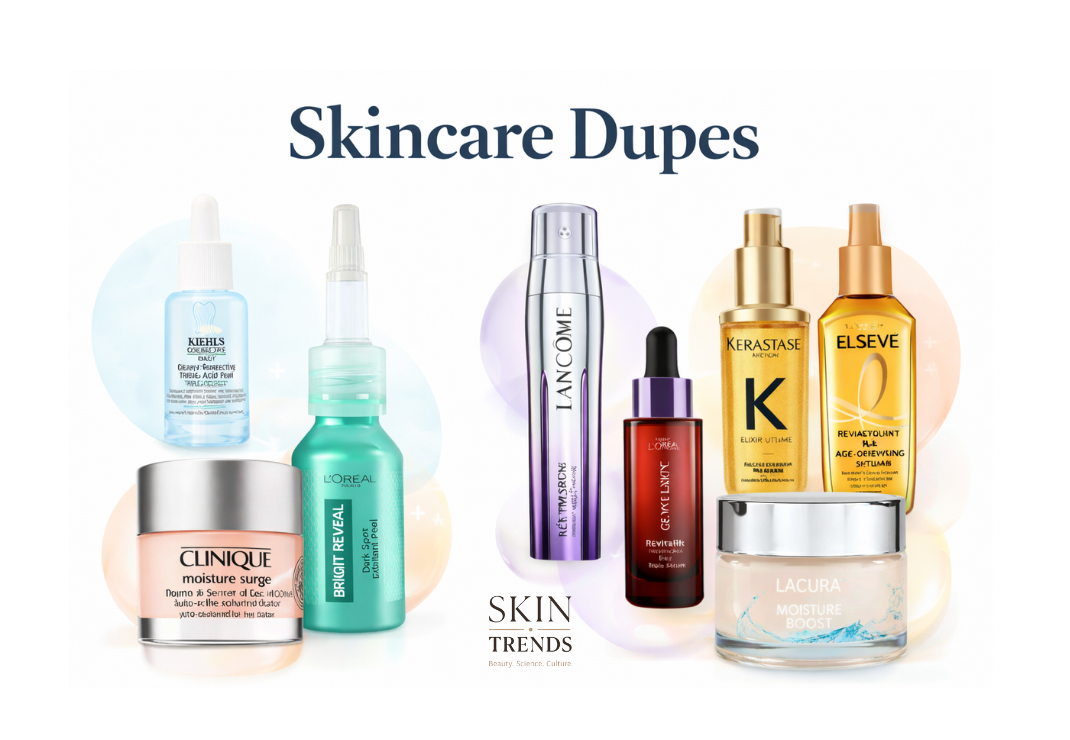
When Different Brands Sell Surprisingly Similar Products
In today’s beauty market, it’s no longer unusual to find products from different brands that feel, perform, and even behave remarkably alike. This isn’t about counterfeit formulas or “fake luxury.” It’s about how large beauty groups operate, how active ingredients are sourced, and how formulation logic often overlaps across price tiers.
Many global companies own multiple brands positioned at different price points. While each brand has its own identity, marketing language, and target audience, the underlying science often follows similar principles. The result? Products that may differ in texture refinements or packaging—but deliver comparable results on the skin.
Below are real-world examples frequently discussed by skincare professionals, formulators, and ingredient-focused communities. These are not identical products, but strongly comparable alternatives worth understanding.
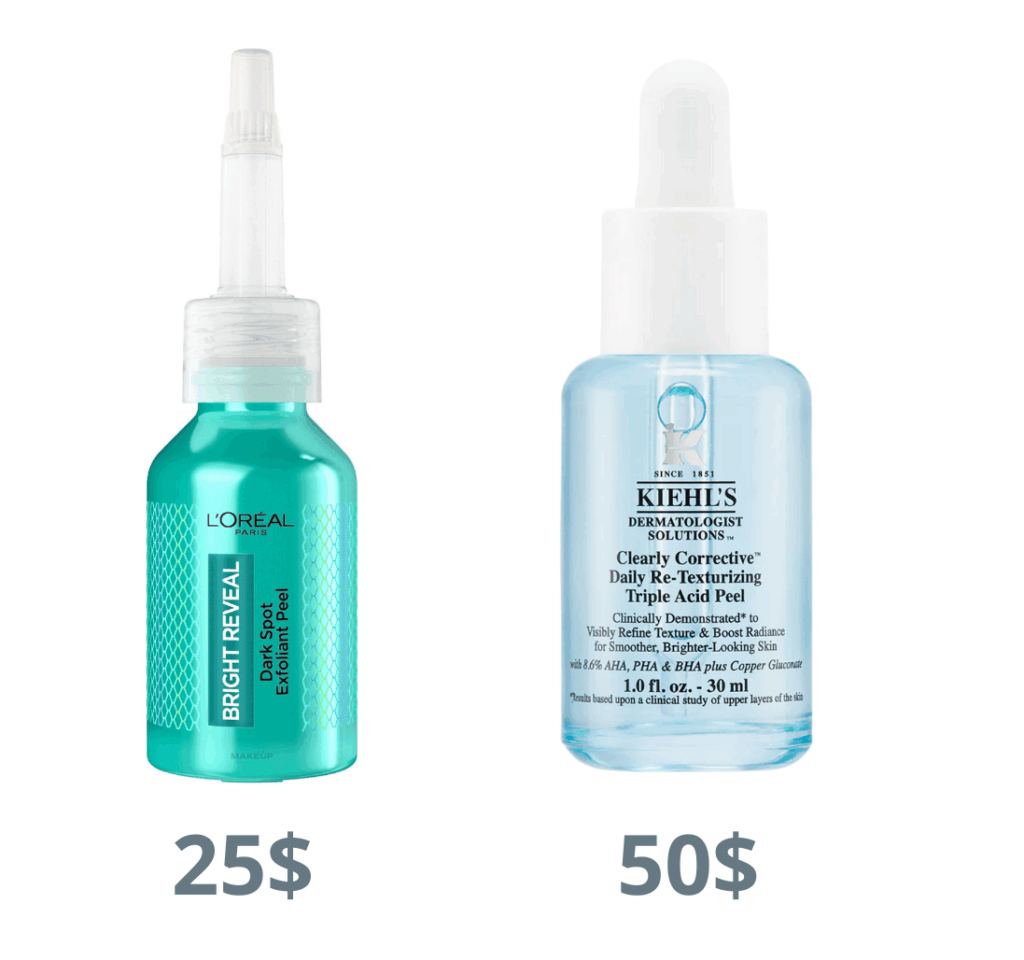
1. Kiehl’s Clearly Corrective Daily Re-Texturizing Triple Acid Peel
vs.
L’Oréal Dark Spot Exfoliant Peel
Both products are designed to improve skin texture, brightness, and uneven tone through chemical exfoliation.
Shared key ingredients:
- Alpha Hydroxy Acids (AHAs) – help loosen dead skin cells and promote surface renewal
- Polyhydroxy Acids (PHAs) – larger molecular acids that exfoliate more gently and support hydration
- Humectants (such as glycerin) – help maintain moisture balance during exfoliation
The similarity lies in how both products combine effective exfoliation with skin-conditioning agents, allowing regular use without excessive irritation when used correctly.
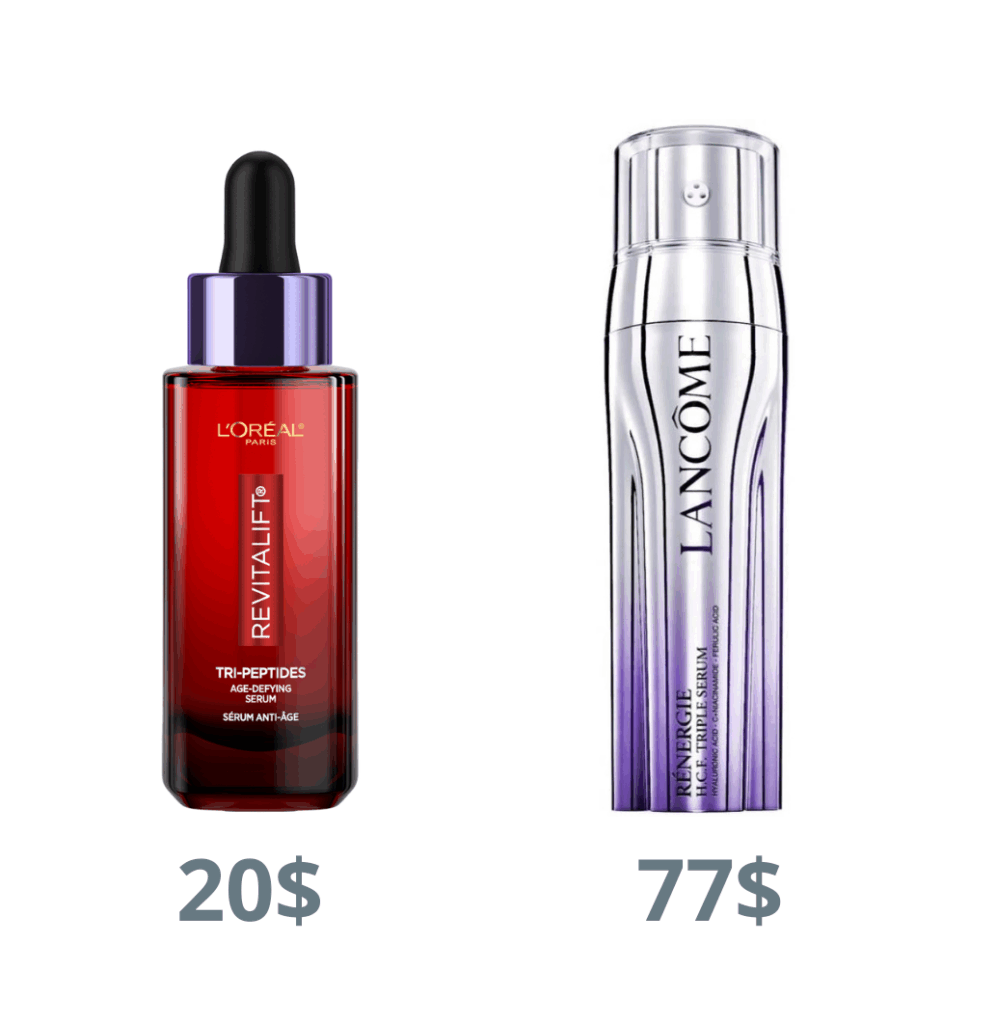
2. Lancôme Rénergie H.C.F. Triple Serum
vs.
L’Oréal Revitalift Triple Power or Revitalift Tripeptide Serum
These serums are built around anti-aging performance, combining multiple actives in one formula to target firmness, wrinkles, and skin quality.
Lancôme’s Rénergie Triple Serum is famous for its multi-chamber packaging, delivering different actives simultaneously. L’Oréal’s Revitalift Triple Power or Tripeptide Serum aims to address similar concerns—loss of firmness, fine lines, and skin density—using peptides and hydrating agents.
Shared key ingredients:
- Peptides – signal-support ingredients associated with firmness and elasticity
- Hyaluronic Acid – enhances hydration and temporarily improves skin plumpness
- Niacinamide (Vitamin B3) – supports barrier function and overall skin quality
Both formulations rely on a multi-active approach, combining hydration with peptide-driven skin support rather than focusing on a single hero ingredient.
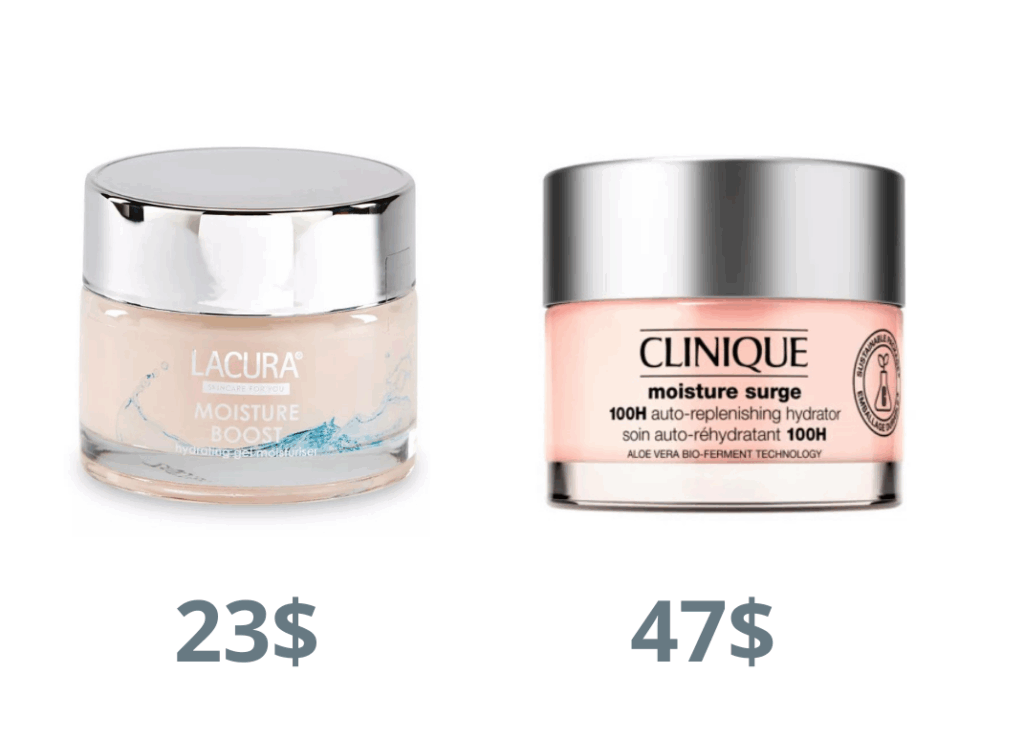
3. Clinique Moisture Surge
vs.
Aldi Lacura Moisture Boost Gel
This is one of the most widely discussed “dupe” comparisons online—and for good reason.
Clinique Moisture Surge is a cult-favorite gel moisturizer known for lightweight hydration and barrier support. Aldi’s Lacura Moisture Boost Gel delivers a similar gel texture and hydrating feel, often surprising users with how close the experience feels.
Shared key ingredients:
- Glycerin – a powerful humectant that draws water into the skin
- Hyaluronic Acid – improves moisture retention and skin comfort
- Lightweight emollients – help smooth the skin without heaviness
Ingredient-wise, both products prioritize water-binding molecules rather than heavy oils, making them suitable for dehydrated but not necessarily dry skin.
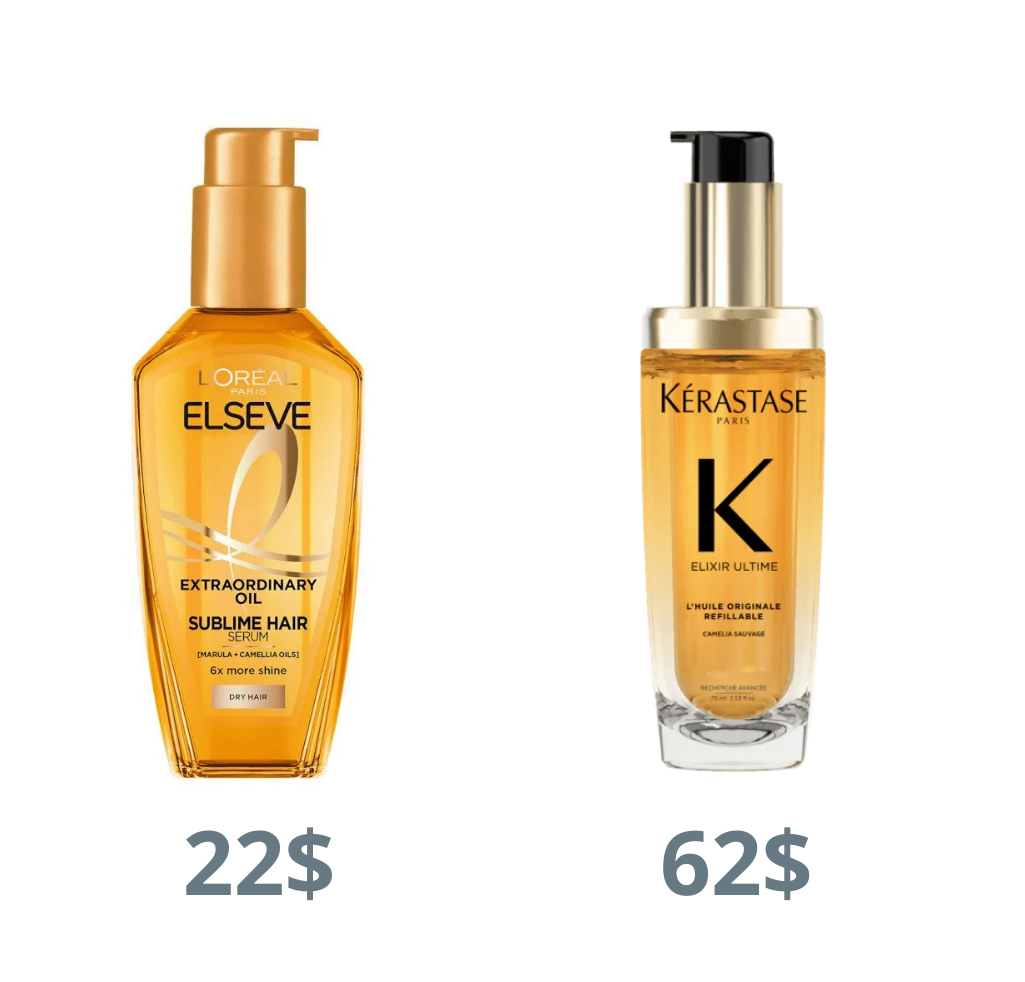
4. Kerastase Elixir Ultime Hair Oil
vs.
L’Oréal Elvive Extraordinary Oil
Although haircare, this comparison highlights how brand families operate across categories.
Kerastase Elixir Ultime is marketed as a luxury hair oil for shine, softness, and protection. L’Oréal Elvive Extraordinary Oil targets the same goals using a blend of nourishing oils.
Shared key ingredients:
- Plant-derived oils (such as argan or camellia oil) – provide shine and softness
- Silicones – coat the hair shaft to reduce friction and improve appearance
- Lightweight conditioning agents – enhance manageability without weighing hair down
Both products rely on a blend of oils and film-forming ingredients to achieve smoothness and shine.
Why These Similarities Exist
Large beauty corporations often share:
- Ingredient suppliers
- Research and development infrastructure
- Proven formulation frameworks
This doesn’t mean formulas are copied—but it does mean innovation travels within brand families, adapted for different audiences and budgets.
For consumers, this opens up more choice. Understanding ingredients and formulation goals can sometimes matter more than the logo on the bottle.
The Takeaway
Price does not always equal performance. While luxury products may offer superior textures, refined experiences, or advanced delivery systems, more affordable alternatives can often deliver comparable results—especially when the core active ingredients align.
Knowing how to read labels and understand formulation intent empowers smarter skincare decisions—without sacrificing results.
Why More Protection Isn’t Always Better for Your Skin
One thought on “When Different Brands Sell Surprisingly Similar Products”
Leave a Reply



Thank you for this articles, they are very helpful and truthful!! 🙂