Post-Procedure Skincare Is No Longer an Afterthought — It’s Becoming a Category of Its Own
For years, skincare ended where the clinic began.
If you wanted visible results, you booked a laser session, a peel, or a skin booster. Whatever cream you used afterward was simply there to “soothe.”
Today, that logic is shifting.
Post-procedure skincare is no longer a supporting step. Instead, it is quietly becoming a category of its own — with dedicated products, structured protocols, and growing market power.
The Aesthetic Boom Changed the Conversation
Minimally invasive procedures are no longer rare or dramatic. On the contrary, they have become routine.
Laser resurfacing, microneedling, chemical peels, radiofrequency tightening, preventive injectables — these are now considered “maintenance” rather than transformation.
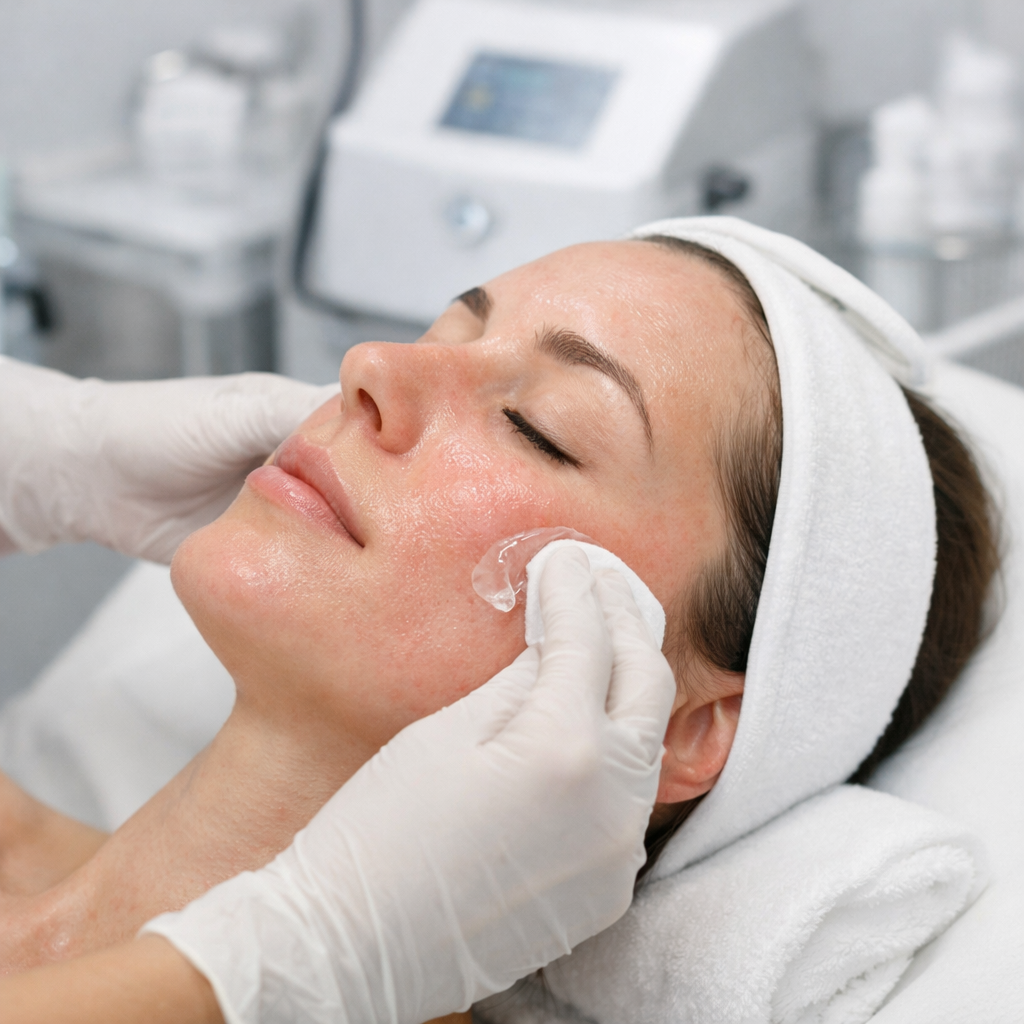
However, every one of these procedures temporarily weakens the skin barrier.
After treatment, the skin becomes:
- More sensitive
- More reactive
- More prone to dehydration
- More vulnerable to UV exposure
As a result, what happens after the appointment becomes just as important as the procedure itself.
Recovery Is Part of the Result
A successful treatment is not defined only by what happens in the clinic. Instead, it is shaped by how the skin recovers in the following days.
When healing is smooth, results look better.
Controlled inflammation lowers the risk of pigmentation issues.
Restored hydration improves texture and comfort.
In other words, recovery is not optional — it becomes part of the treatment outcome.
Because of this shift, “aftercare” is no longer a generic soothing step. It has evolved into a structured protocol designed to protect results.
Why Dermocosmetic Brands Are Positioned to Lead
Pharmacy-focused brands such as La Roche-Posay, Avène and Bioderma have steadily positioned themselves at the center of this space.
They are not selling glamour. Instead, they are selling controlled recovery.
Their formulas typically focus on:
- Fast barrier repair
- High tolerance for compromised skin
- Minimal, carefully selected ingredients
- Clinically tested calming complexes
In some cases, sterile packaging systems are introduced to reduce contamination risk while the skin is in a fragile state.
This is not influencer-driven skincare.
It is protocol-driven skincare.
It’s Not Just a “Soothing Cream”
Post-procedure products are different by design.
They are created to:
- Reduce visible redness quickly
- Support barrier repair without triggering irritation
- Deliver hydration without heavy occlusion
- Provide reliable sun protection during heightened sensitivity
For that reason, strong acids are typically excluded. Similarly, aggressive retinoids are deliberately avoided in early recovery stages.
Instead, the focus shifts toward stabilization.
That difference may seem subtle. In reality, it reflects a deeper understanding of how compromised skin behaves.
A Quiet but Powerful Market Shift
What many consumers do not immediately notice is how recommendation dynamics change in this category.
When a dermatologist suggests a post-procedure product, the decision is no longer trend-driven. It is trust-driven.
As a result, several things happen:
- Conversion rates increase
- Brand loyalty strengthens
- Price sensitivity decreases
- Repurchase cycles become more predictable
Unlike hype-based skincare, post-procedure care is need-based. Therefore, it tends to remain stable even when trends fluctuate.
At the same time, as aesthetic procedures become more common among younger demographics, this adjacent product ecosystem continues to expand.
The Bigger Picture
We are witnessing a subtle but important evolution.
Skincare is no longer clearly divided into “cosmetic” and “clinical.” Instead, a bridge has formed between the two — and post-procedure care sits exactly on that bridge.
It combines:
- Medical credibility
- Cosmetic usability
- Strong margin potential
- Long-term consumer retention
Ultimately, post-procedure skincare started as an afterthought.
Today, it is becoming infrastructure — quietly shaping how results are protected, maintained, and extended.
And in a beauty industry obsessed with transformation, recovery may be the most strategic step of all.
The Return of Kojic Acid: Why This Ingredient Is Everywhere Again