PDRN Serum: What It Is and What Science Really Says
If you spend any time on skincare TikTok or Korean beauty forums, you’ve probably noticed the rising buzz around PDRN serums.
They’re promoted as repairing, regenerating, soothing, and even “glass-skin–enhancing.”
But is PDRN really a breakthrough ingredient, or just another trend wrapped in scientific language?
To answer that, we need to understand what PDRN actually is — and what it genuinely does for the skin.
What Is PDRN, Really?
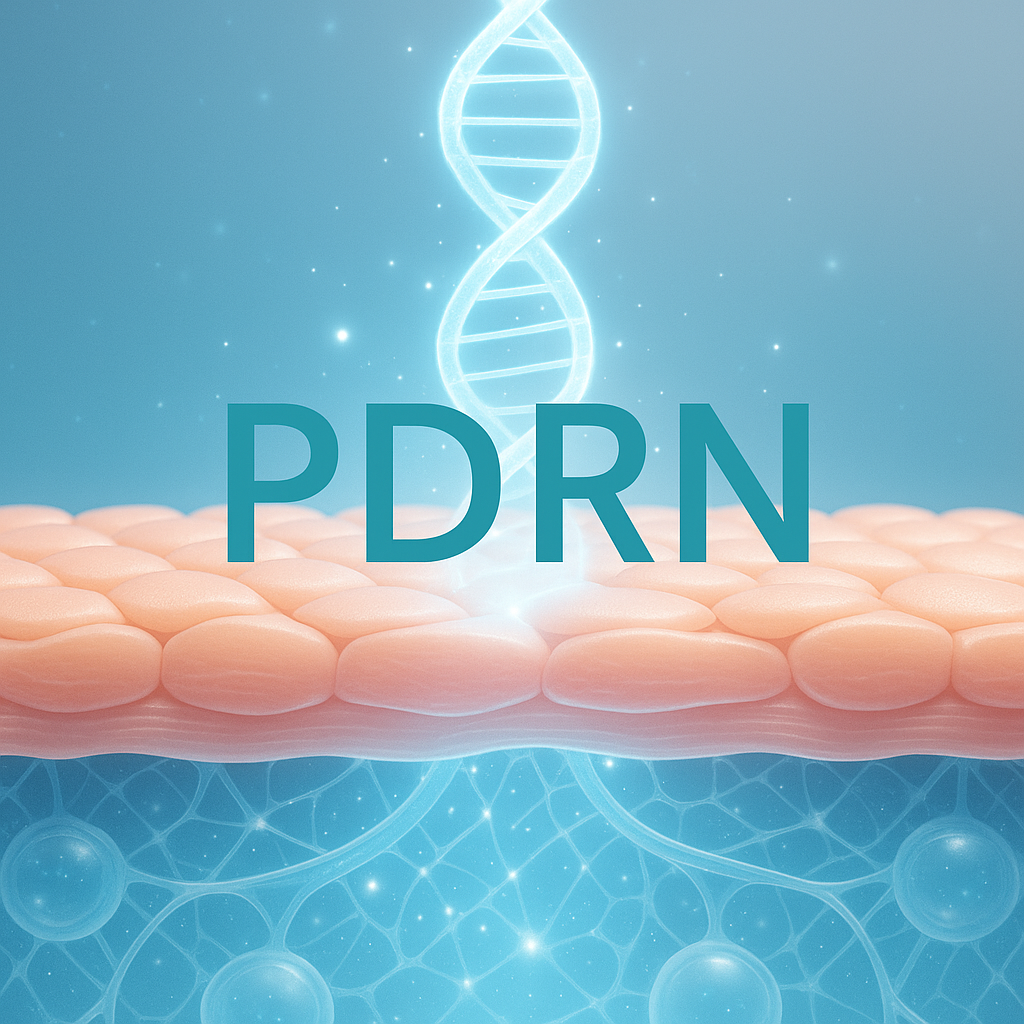
PDRN stands for polydeoxyribonucleotide, a naturally derived DNA fragment most commonly sourced from salmon or trout. Although the origin surprises some people, the science behind it is far more compelling than the name suggests.
Originally used in medicine to support tissue repair and wound healing, PDRN has moved into the world of aesthetic treatments (like Rejuran injections) and now into cosmetics as a topical serum. At its core, PDRN is a regenerative molecule — one that helps the skin recover, rebuild, and strengthen itself.
How PDRN Works (Explained Simply)
The mechanisms behind PDRN can sound intimidating, but they’re surprisingly easy to understand.
One of its main actions is the activation of specific receptors in the skin called A2A receptors. When stimulated, these receptors shift the skin into a more balanced, less inflamed state — which is why PDRN serums often feel calming and restorative, even on irritated skin.
Another fundamental effect comes from its ability to support cell regeneration. PDRN contains small DNA fragments that the skin can use during repair processes. This encourages healthier cell turnover and supports collagen synthesis — not in a dramatic, “anti-wrinkle” way, but in a gradual strengthening of the skin’s overall structure.
What Benefits Can You Realistically Expect?
While the science behind PDRN is solid, the results it delivers are more subtle than the marketing sometimes suggests.
Its greatest strengths lie in its ability to support healing, calm inflammation, and improve texture over time. Many users notice that their skin feels smoother, more hydrated, and more resilient.
PDRN is also helpful for skin that tends to redden or react easily, because it helps restore balance and reduces irritation. Over time, it can improve the appearance of post-acne marks and support healthier turnover, leading to a more even-looking complexion.
These benefits make PDRN especially appealing for sensitive, stressed, or compromised skin — the type that struggles with harsh actives or requires extra care after aesthetic procedures.
What PDRN Doesn’t Do
It’s equally important to understand what PDRN is not.
It isn’t a substitute for Botox, it won’t erase wrinkles overnight, and it doesn’t deliver dramatic lifting effects.
Topical PDRN serums offer gentler, surface-level benefits compared to injectable PDRN (such as Rejuran), which works much deeper in the skin.
PDRN is also not the same as snail mucin — a common misconception. While both ingredients support repair, they operate through different biological pathways and are not interchangeable.
Who Should Consider PDRN Serum?
Because PDRN is both soothing and regenerative, it suits a wide range of skin types.
It’s especially beneficial if your skin feels:
- sensitive or reactive
- dehydrated or dull
- easily irritated by strong exfoliants or retinoids
- slow to recover after breakouts
- prone to redness
Many people find that PDRN helps improve the skin’s overall comfort and resilience, making it an excellent addition to routines centered around repair and strengthening.
How to Use It in Your Routine
PDRN serums integrate easily into most routines.
Use it after cleansing and before your moisturizer, both morning and evening if your skin enjoys it.
It pairs beautifully with gentle ingredients like niacinamide, ceramides, hyaluronic acid, and peptides.
If your skin is sensitive, simply avoid layering it with strong retinoids or aggressive exfoliants in the same routine.
With consistent use, PDRN becomes a quiet but reliable “support system” for your skin — one that improves texture, boosts hydration, and helps maintain balance.
PDRN isn’t a miracle, but it is one of the most interesting and genuinely beneficial repair ingredients in modern skincare. Its ability to calm, hydrate, and support skin regeneration makes it particularly valuable for people dealing with sensitivity, inflammation, or recovery after aesthetic treatments.
Think of PDRN as an investment in your skin’s long-term health — not a quick fix, but a thoughtful step toward stronger, smoother, and more resilient skin.
Read more about best morning routines
Related Posts

AI in Dermatology: The Problem No One Talks About
PDRN Serum: What It Is and What Science Really Says