Skin Rituals: Morocco — A Different Rhythm of Skin Care
Skin Rituals is a new editorial series by SkinTrendsEU, dedicated to exploring how skincare is shaped by culture, climate, and everyday life around the world. Rather than focusing on trends or products, the series looks at real routines, long-standing practices, and habits that continue to influence how people care for their skin today.
In Morocco, skincare has never been about constant correction. Instead, it follows a slower rhythm — one built around pauses, periodic deep cleansing, and long stretches of letting the skin rest.
Cleansing as an occasional ritual, not a daily routine
One of the most striking differences in Moroccan skincare culture is the idea that deep cleansing is not meant to happen every day. Rather than stripping the skin regularly, cleansing is treated as a ritual, often performed weekly or bi-weekly.
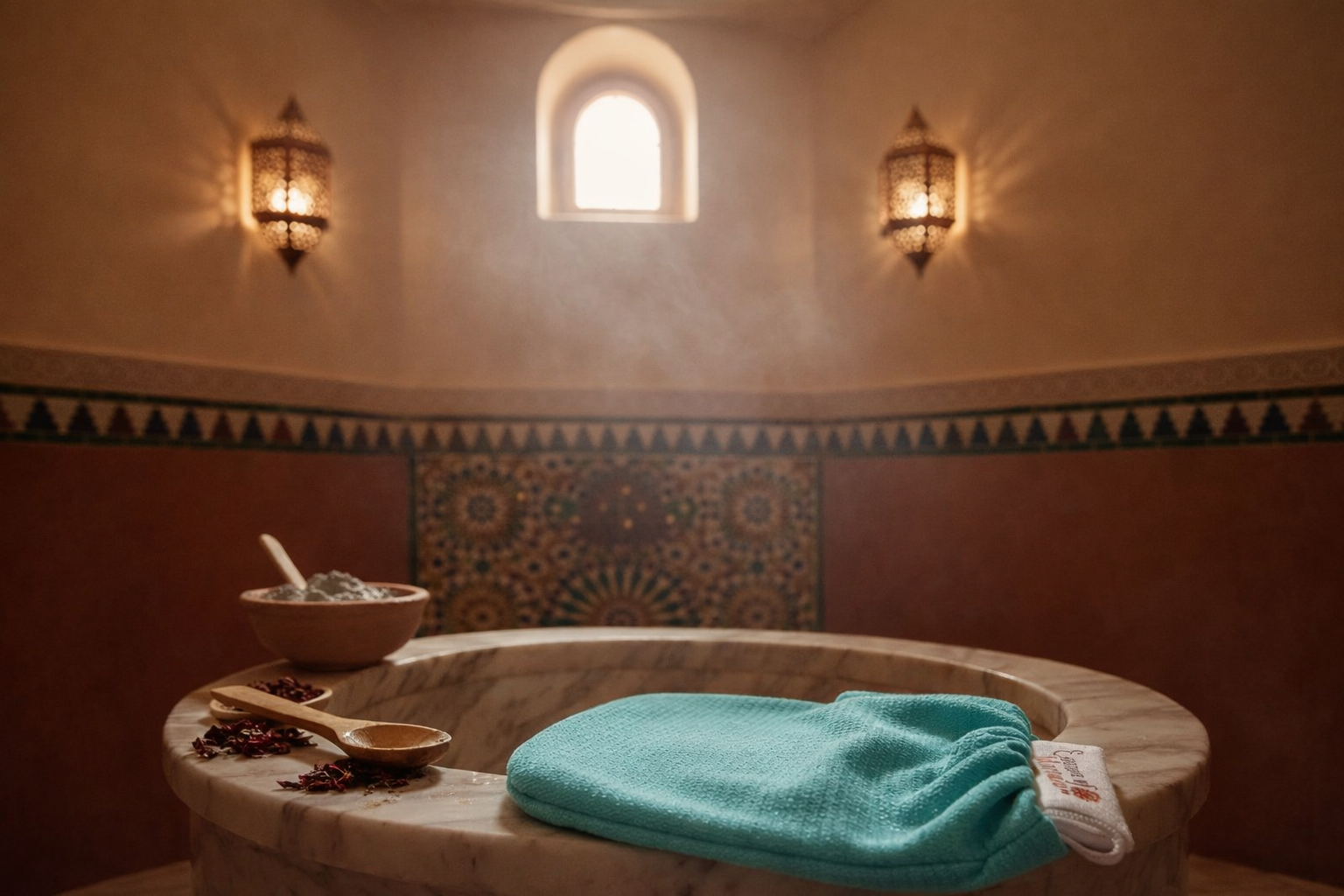
This approach is closely linked to the traditional hammam. While modern life has changed how often people visit communal bathhouses, the logic behind the practice remains relevant: exfoliation and deep cleansing are powerful, and therefore should be done intentionally, not constantly.
The skin is given time to recover between these moments, rather than being pushed into a daily cycle of exfoliation and repair.
Savon noir and rhassoul: functional, not symbolic
Two ingredients continue to define Moroccan skin rituals today: savon noir (black soap) and rhassoul clay.
Savon noir is a soft, olive-based soap used to prepare the skin before exfoliation. Its role is not aggressive cleansing, but softening the skin so that dead cells can be removed gently. Rhassoul clay, sourced from the Atlas Mountains, is then used to cleanse and purify without disrupting the skin barrier.
What’s important is how these ingredients are used. They are not applied daily, nor layered excessively. They appear at specific moments, as part of a deeper reset, followed by long periods of minimal intervention.
Oils as protection, not treatment
In Moroccan routines, oils are not used as active treatments in the modern sense. Instead, they function as protective layers.
Argan oil — still widely used today — is applied sparingly, often to slightly damp skin, to maintain softness and resilience in a dry, hot climate. The goal is not to change the skin, but to support it against environmental stress.
This perspective contrasts sharply with routines focused on transformation or visible correction. Here, skincare is about maintenance, not modification.
A climate-driven philosophy
Morocco’s climate plays a quiet but decisive role in shaping these rituals. Heat, sun exposure, and dry air require approaches that prioritize protection and recovery over stimulation.
This explains why Moroccan skincare emphasizes:
- fewer interventions
- deeper but less frequent cleansing
- generous recovery time
Rather than pushing the skin to perform, the routine adapts to the environment.
Why this rhythm still matters today
While many people no longer follow traditional rituals exactly as they once were practiced, the underlying logic remains surprisingly relevant. As modern skincare increasingly grapples with over-exfoliation, barrier damage, and irritation, the Moroccan approach offers a different perspective: doing less, but with intention.
It’s not about recreating cultural rituals step by step. It’s about understanding the rhythm behind them — knowing when to act, and when to leave the skin alone.
This is just the beginning of our Skin Rituals journey. We’ll continue exploring how different cultures approach skincare — from daily habits to deeply rooted routines.
Which country’s skin rituals would you like us to explore next? Share your thoughts in the comments.
One thought on “Skin Rituals: Morocco — A Different Rhythm of Skin Care”
Leave a Reply



Extremely interesting column, I look forward to seeing more from our latitude,
Greetings from Egypt!