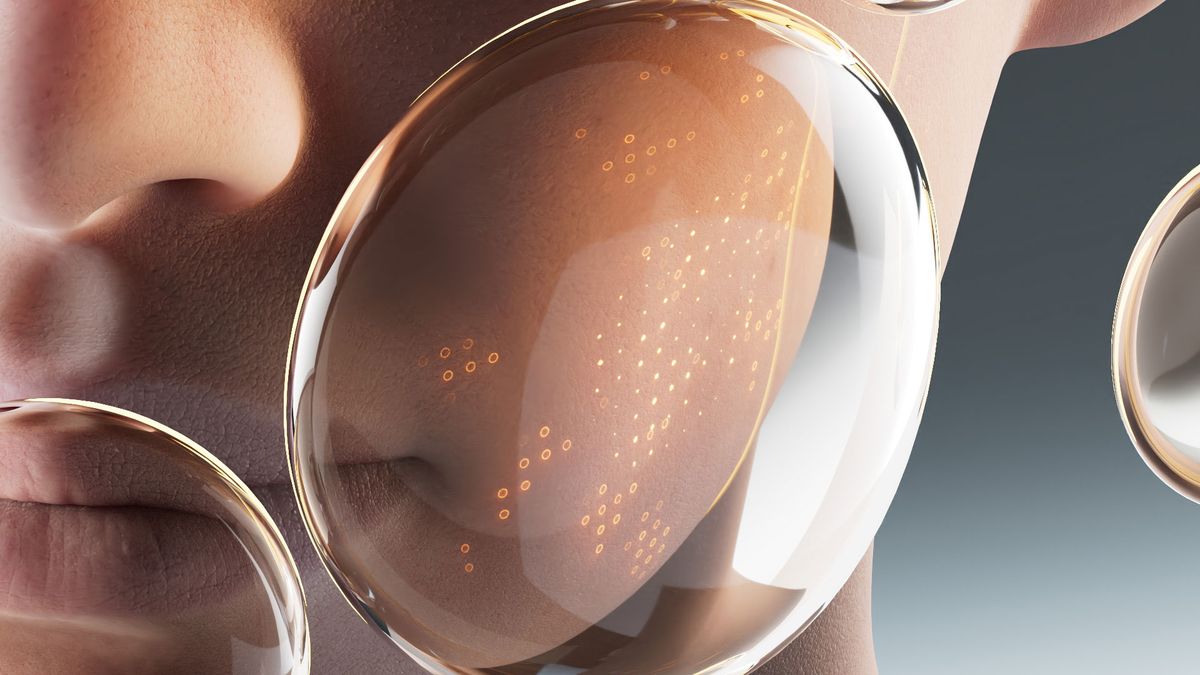
What “Healthy Skin” Actually Means in 2026
Everyone talks about “healthy skin.”
But what does that actually mean in 2026?
For years, the idea of healthy skin was closely tied to perfection — smooth texture, invisible pores, an even tone, and a constant glow. Social media amplified this image, turning “flawless” into the standard. The closer skin looked to a filter, the more it was perceived as healthy.
But quietly, that definition has started to shift.
Today, healthy skin is no longer defined by how perfect it looks — but by how well it functions.
From Perfect Skin to Functional Skin
The change didn’t happen overnight. It emerged gradually, as both dermatologists and consumers began to notice a pattern: the more we tried to perfect the skin, the more reactive it became.
The rise of highly active routines — layered acids, retinoids, exfoliants — delivered quick results, but often at a cost. Many people began experiencing sensitivity, redness, and a compromised skin barrier. Skin that once felt stable started to react unpredictably.
This led to a simple but important realization: skin isn’t meant to be constantly corrected — it’s meant to be supported.
What Science Tells Us About Healthy Skin
From a scientific perspective, healthy skin is less about appearance and more about balance.
At the core of this idea is the skin barrier — the outermost layer responsible for keeping moisture in and environmental stressors out. When this barrier is intact, the skin feels calm, hydrated, and stable. When it’s disrupted, even the most basic products can cause discomfort.
Closely connected to this is inflammation, which is not always visible. Low-grade, chronic inflammation can exist beneath the surface, slowly affecting collagen, increasing sensitivity, and accelerating signs of aging. Modern skincare is increasingly focused on reducing this invisible stress rather than just treating what we can see.
Another important factor is the skin microbiome — a complex ecosystem of microorganisms that plays a key role in maintaining skin health. When balanced, it helps regulate inflammation and protect the skin. When disrupted, the skin becomes more reactive and less resilient.
Why the Definition Is Changing Now
This shift toward a more functional understanding of skin health is not accidental.
In recent years, consumers have become more informed, largely due to increased access to dermatological knowledge. At the same time, the overuse of strong active ingredients has made sensitivity more common than ever.
There is also a growing focus on long-term skin health. Instead of asking how to fix a problem quickly, more people are starting to think about how to maintain skin stability over time. Treatments like lasers, peels, and injectables have also contributed to this change, as recovery and barrier support have become essential parts of skincare routines.
What Healthy Skin Actually Looks Like
In reality, healthy skin in 2026 doesn’t necessarily match the polished images we’re used to seeing.
It may have visible pores, natural texture, or slight variations in tone. It might not look “perfect” in every light or at every moment. But what defines it is something less obvious — consistency.
Healthy skin feels balanced. It doesn’t overreact. The skin recovers relatively quickly when something disrupts it. It holds hydration and maintains a sense of stability, even when exposed to external stress.
The Rise of Skin Resilience
One of the most important concepts shaping modern skincare is resilience.
Resilient skin is not skin that never reacts — it’s skin that can adapt. It can handle change, recover after stress, and return to a balanced state without prolonged irritation.
This is why many routines are becoming simpler and more supportive. Ingredients like ceramides, panthenol, and centella asiatica are gaining popularity, not because they transform the skin overnight, but because they help maintain its function over time.
Even trending ingredients like PDRN fit into this approach, focusing on repair and recovery rather than aggressive correction.
Final Thought
Healthy skin is no longer about chasing perfection.
It is about building a skin that can function, adapt, and recover — even when conditions are not ideal.
In 2026, the goal is not flawless skin.
It is strong, balanced, and resilient skin — the kind that doesn’t just look good, but actually works the way it should.
One thought on “What “Healthy Skin” Actually Means in 2026”
Leave a Reply



I agree, consistency leads to results, not aggressive products. Great article.