Celebrity Beauty Brands: Who’s Still Relevant in 2026?
When celebrity beauty brands first flooded the market, the reaction was predictable: excitement, skepticism, and saturation.
At one point, it felt like every major name in entertainment had a serum, a lip oil, or a skincare philosophy to sell. But as the industry moves into 2026, the real question is no longer who launched a brand — it’s who managed to stay relevant.
Because visibility and longevity are two very different things.
The First Wave: Hype-Driven Launches
Between 2019 and 2023, celebrity beauty reached peak velocity. High-gloss campaigns, viral TikTok moments, and limited drops drove massive initial traction.
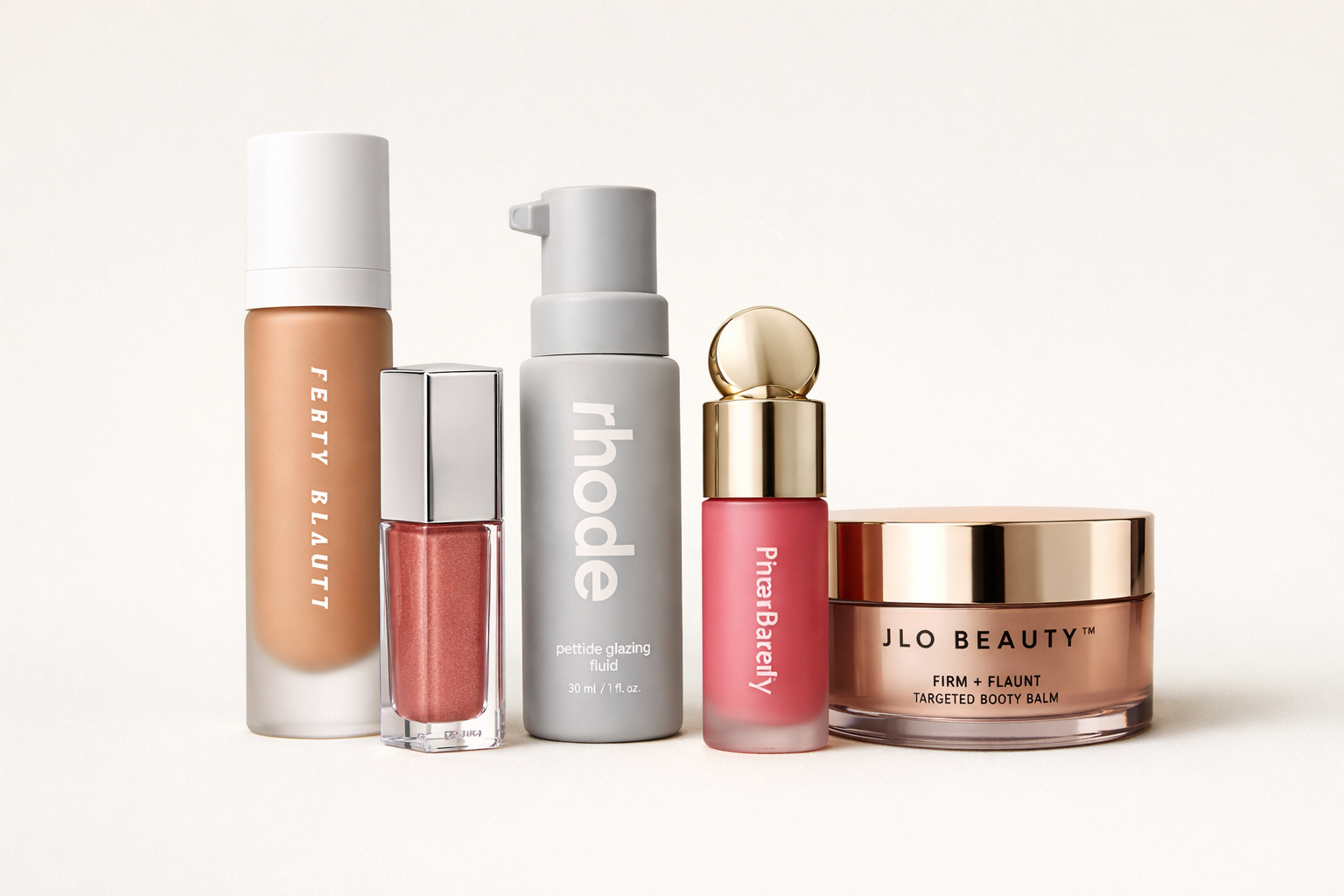
Brands like Rhode, Rare Beauty, and Fenty Beauty quickly became cultural fixtures — but for different reasons.
Some leaned heavily into founder identity. Others built strong product credibility. A few managed to balance both.
Now, several years later, the industry is beginning to distinguish between brands that were driven by momentum — and those that built structure.
What Keeps a Celebrity Brand Relevant?
Relevance in 2026 seems to depend on three factors:
- Product performance beyond the founder’s fame
- Clear positioning within a crowded category
- Consistency in formulation and communication
Celebrity affiliation may create launch visibility, but it no longer guarantees sustained consumer trust.
Brands that relied purely on star power have quietly faded from conversation. Meanwhile, others have matured into full-scale beauty businesses.
The Brands That Adapted
Fenty Beauty remains one of the strongest examples of celebrity beauty evolving into industry infrastructure. Its expansion into skincare and fragrance strengthened its long-term footprint.
Rare Beauty differentiated itself through emotional branding and mental health alignment — creating a value system beyond product launches.
Rhode leaned into minimalism and routine simplicity, capitalizing on cultural shifts toward “less but better.”
Meanwhile, brands like JLo Beauty took a more traditional luxury-aging route, targeting a demographic often overlooked in influencer-driven skincare.
Some celebrity brands go the traditional skincare or makeup route — like Rhode and *Fenty *. Others, like The Honest Company from Jessica Alba, take a broader lifestyle approach, blending wellness, safety-first formulations, and beauty care. Their longevity underscores that relevance isn’t only about product visibility — it’s about purpose and adaptability.
A More Mature Market
The celebrity beauty boom is no longer in its explosive phase. It is entering consolidation.
Retail partners are more selective. Consumers are more informed. Ingredient literacy is higher. Marketing language is scrutinized.
In 2026, relevance is no longer measured by launch hype or Instagram engagement alone. It is measured by:
- Shelf longevity
- Repeat purchase behavior
- Expansion strategy
- Product development depth
Celebrity brands that behave like serious beauty companies survive. Those that remain personality extensions struggle.
Beyond Fame
What 2026 is revealing is not the decline of celebrity beauty — but its normalization.
The category is no longer disruptive. It is simply part of the industry.
And in that normalization, only the brands with real structure, real formulation strategy, and clear identity continue to matter.
Skincare Ingredients Are Quietly Moving Beyond the Face