We’ve all seen it before.
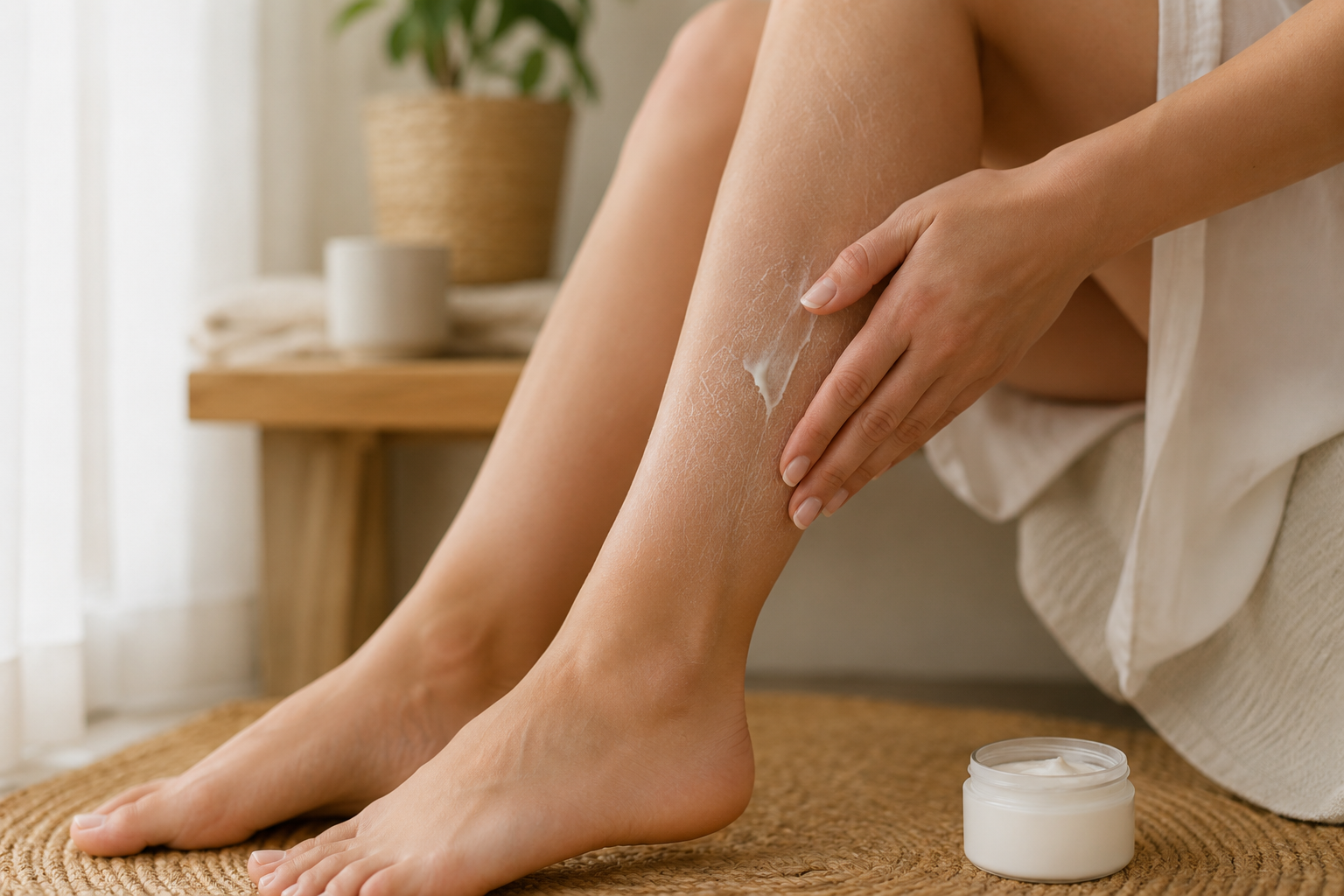
Someone has skin on their lower legs that always looks unusually dry. No matter how much body lotion they use, it still appears rough, flaky or covered with tiny cracks. Most of us never think much about it. We simply assume they have very dry skin.
And very often, that’s exactly the case.
But sometimes, skin that has looked this way for years may have another explanation.
One possible reason is a condition called ichthyosis vulgaris—a name that sounds unfamiliar to most people, even though it’s the most common inherited form of ichthyosis.
More Common Than Its Name Suggests
If you’ve never heard of ichthyosis vulgaris, you’re not alone.
Despite its intimidating name, many people live with this condition without ever receiving a diagnosis. Some simply believe they’ve inherited “very dry skin” from their parents. Others spend years trying different moisturizers without realizing there may be a reason why their skin never becomes completely smooth.
The condition is often mild enough to be mistaken for ordinary dry skin, which is one reason it frequently goes unrecognized.
So, What Actually Happens?
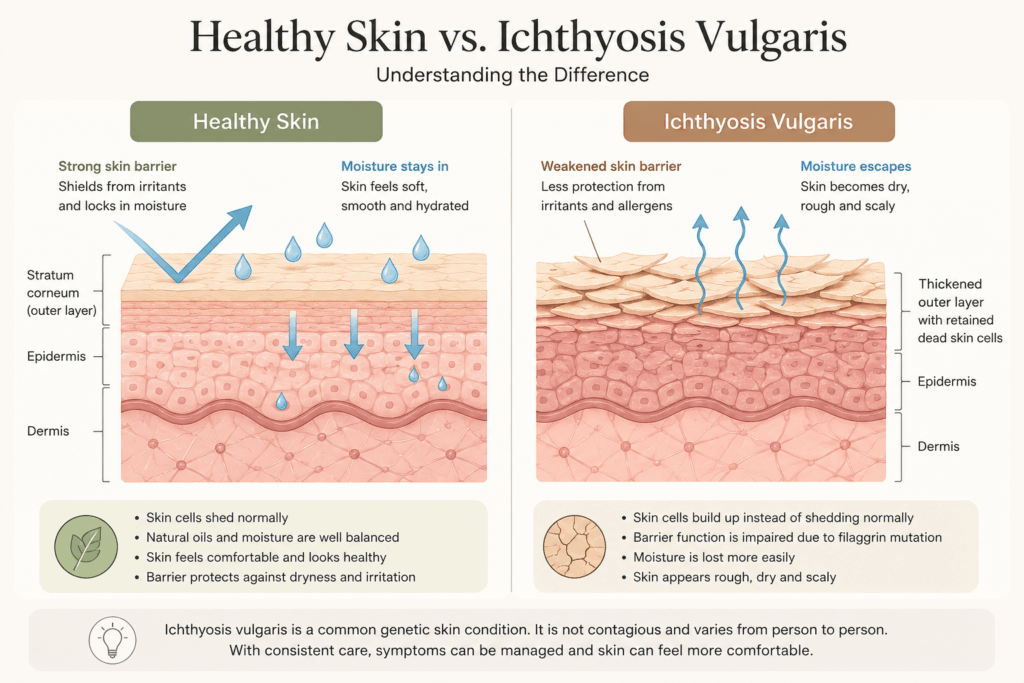
Our skin is constantly renewing itself.
Every day, old skin cells are shed from the surface while new ones take their place. It’s a natural process that helps keep the skin soft and healthy.
With ichthyosis vulgaris, that renewal process doesn’t work quite as efficiently.
Instead of being shed normally, dead skin cells remain on the surface for longer than they should. Over time, they build up, giving the skin a rough, dry appearance with fine scales.
The name ichthyosis comes from the Greek word for “fish” because the skin can sometimes resemble tiny fish scales. In reality, however, many people have a much milder form that simply looks like persistent dry skin.
Why Is It So Easy to Miss?
Because it doesn’t usually look dramatic.
In mild cases, the skin simply feels rough and never seems completely hydrated.
The lower legs are one of the most common places where the condition appears, especially along the shins. Some people also notice rough skin on their arms or changes in the palms of their hands.
The symptoms often become more noticeable during winter, when cold weather and low humidity make all dry skin worse. In warmer, more humid climates, the condition may improve considerably.
Isn’t That Just Dry Skin?
Sometimes it is.
Dry skin is incredibly common and can be caused by weather, long hot showers, ageing, harsh soaps or simply not moisturizing enough.
That’s why nobody should assume they have ichthyosis vulgaris simply because their skin feels dry.
The difference is that ordinary dry skin usually improves once the underlying cause is addressed. Ichthyosis vulgaris tends to follow a much more consistent pattern. The rough texture often has been present for many years, sometimes since childhood, and regular moisturizers may help but rarely make it disappear completely.
Is It Dangerous?
In most cases, no.
Ichthyosis vulgaris is not contagious, and it isn’t caused by poor hygiene or a lack of skincare.
For many people, it’s simply a lifelong skin condition that requires a little more attention than average dry skin.
Some people with ichthyosis vulgaris also have eczema, asthma or seasonal allergies, as these conditions can share changes in the skin barrier, but this doesn’t happen to everyone.
Can Anything Help?
Yes.
Although there isn’t a cure for the inherited form of ichthyosis vulgaris, the symptoms can often be managed very successfully.
Dermatologists usually recommend keeping the skin well hydrated and applying moisturizer immediately after bathing, while the skin is still slightly damp.
Products containing ingredients such as urea or lactic acid are commonly recommended because they not only improve hydration but also help loosen the built-up layer of dead skin cells.
Simple habits can also make a difference. Shorter showers, avoiding very hot water and using gentle cleansers may help reduce further dryness.
The goal isn’t to make the condition disappear overnight. It’s to keep the skin comfortable and healthy over time.
When Is It Worth Seeing a Dermatologist?
Most dry skin doesn’t require medical attention.
However, if your skin has always been unusually rough or scaly, especially if it doesn’t improve despite regular moisturizing, it’s worth mentioning it during a visit to a dermatologist.
A diagnosis can’t be made from a photograph or an online article. Many skin conditions can look similar, and only a healthcare professional can determine what’s actually causing the symptoms.
Final Thoughts
Most of us have called someone else’s skin “just dry” at some point.
And most of the time, we’ve probably been right.
But occasionally, persistent dry skin tells a different story.
Learning about conditions like ichthyosis vulgaris isn’t about encouraging people to diagnose themselves. It’s about understanding that our skin is more complex than it first appears.
Sometimes, the most valuable skincare advice isn’t finding a better moisturizer.
It’s understanding why your skin behaves the way it does.