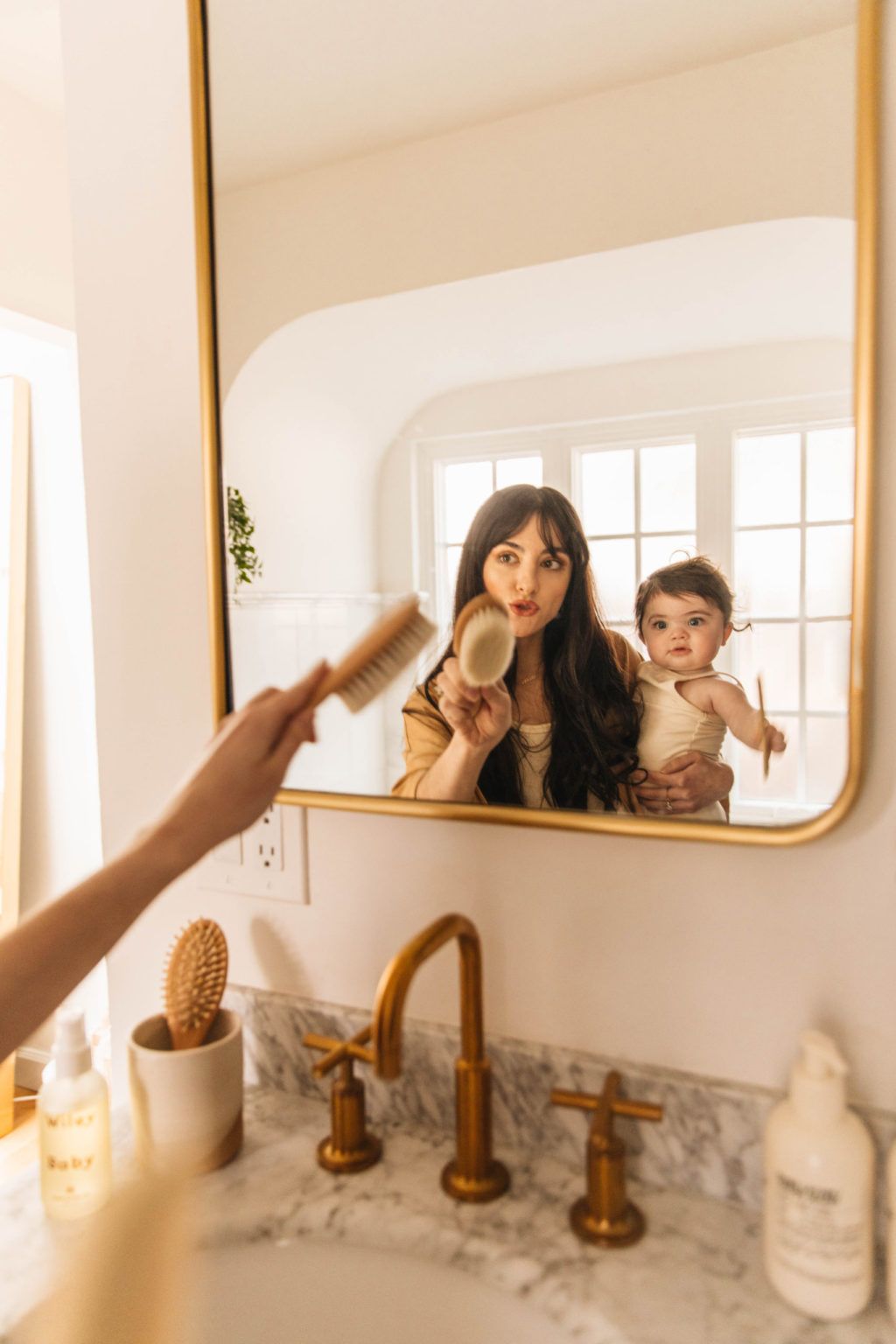
Bringing a baby into the world changes almost every part of your life.
Your daily routine becomes unpredictable. Sleep turns into a luxury. Even simple things like drinking a cup of coffee while it’s still warm suddenly feel like an achievement.
Somewhere between feeding schedules, sleepless nights and learning to care for a newborn, many women notice something unexpected.
Their skin no longer feels like their own.
The moisturizer they’ve loved for years suddenly doesn’t seem enough. Their complexion looks dull, dry or unusually sensitive. Sometimes breakouts appear out of nowhere. Other times, the skin simply feels tired.
It’s easy to think you’re doing something wrong.
In reality, your skin is responding to one of the biggest biological changes the human body can experience.
Your Skin Is Recovering Too
Much of the conversation after childbirth naturally focuses on the baby.
Far less attention is given to the mother’s recovery, even though her body is still going through dramatic changes.
One of the biggest shifts happens almost immediately after delivery, when estrogen levels drop rapidly. This hormonal change affects much more than mood or energy levels.
It also changes the skin.
Estrogen plays an important role in maintaining hydration and supporting the skin barrier. As levels decrease, the skin may lose moisture more easily, feel tighter than usual and become more reactive to products that never caused problems before.
This doesn’t mean your skincare routine has suddenly stopped working.
It means your skin has different needs than it did a few weeks ago.
The Beauty Treatment You Can’t Easily Get
We often hear that sleep is one of the best beauty treatments.
New parents usually smile at that advice.
Because they know sleep is often the one thing they cannot control.
Yet the connection between sleep and skin is very real.
During the night, the skin performs much of its repair work. It restores moisture, supports the skin barrier and helps recover from the environmental stress accumulated throughout the day.
When sleep becomes fragmented night after night, that recovery process becomes less efficient.
At the same time, prolonged stress increases cortisol levels. While cortisol is essential for helping the body cope with challenges, chronically elevated levels may contribute to slower skin recovery, increased sensitivity and a complexion that simply looks more fatigued.
None of this means your skincare products have failed.
Your skin is simply trying to keep up with everything else your body is doing.
Do You Really Need “Postpartum Skincare”?
This is where marketing often steps in.
Search for postpartum skincare and you’ll quickly find products promising to restore your glow, erase signs of fatigue or help your skin bounce back almost overnight.
The reality is usually far less dramatic.
Most postpartum skincare products are not built around revolutionary ingredients. Many are simply moisturizers presented with different packaging and a message tailored to a very specific stage of life.
What your skin often needs most isn’t a miracle formula.
It’s support.
A healthy skin barrier allows the skin to retain moisture more effectively and cope better with daily stress. Ingredients such as ceramides, glycerin and other barrier-supporting moisturizers often make a far greater difference than products promising instant transformation.
Sometimes the simplest routine is also the smartest one.
Less Can Be More
The weeks after giving birth are probably not the time to introduce five new serums or experiment with complicated routines.
Your skin—and your schedule—will likely benefit from simplicity.
A gentle cleanser helps remove impurities without stripping away the skin’s natural protective barrier.
A well-formulated moisturizer can replenish hydration and strengthen the barrier when it needs it most.
And daily sunscreen becomes especially important, as hormonal changes may increase the likelihood of pigmentation, including melasma, in some women.
A short, consistent routine is often more valuable than an ambitious one you never have time to follow.
Your Skin Isn’t Broken
Perhaps the most important thing to remember is this:
Your skin hasn’t failed you.
It is adapting.
Pregnancy, childbirth, hormonal changes, interrupted sleep and the emotional demands of caring for a newborn all place extraordinary demands on the body.
Expecting your skin to behave exactly as it did before would be unrealistic.
The good news is that, for many women, these changes gradually improve as hormones stabilize and life slowly finds a new rhythm.
Until then, give your skin the same patience you would give any other part of your recovery.
Because healing isn’t always about finding the perfect product.
Sometimes, it’s simply about giving your body the time it needs.