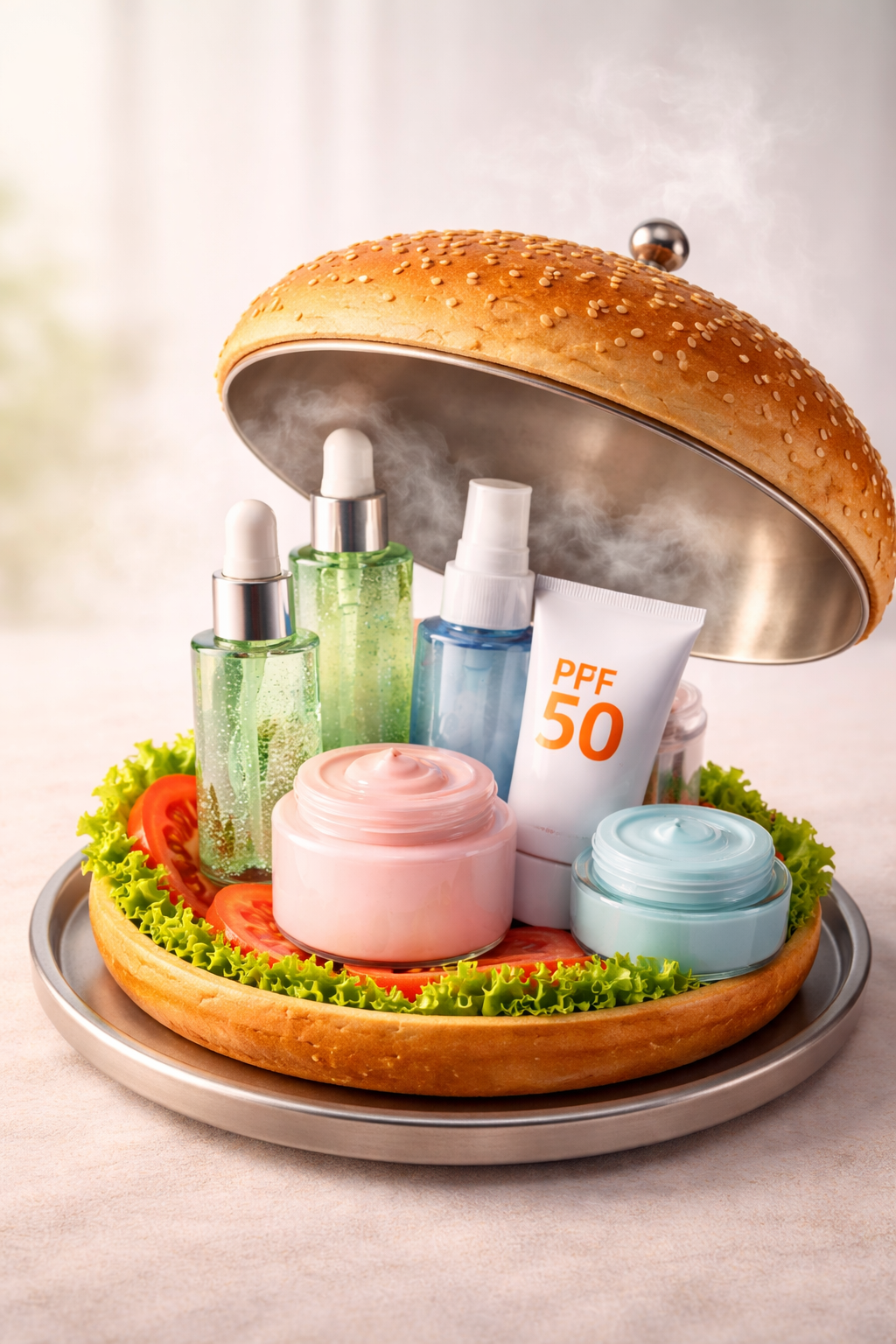
It may sound unexpected, but some of the world’s most recognizable food brands are beginning to explore a completely different space: skincare.
At first glance, the idea of fast food and beauty existing in the same category feels unusual. However, recent launches suggest that this is not just a one-off experiment, but part of a broader shift in how brands position themselves.
Real Examples: When Food Brands Enter Beauty
In one of the most talked-about recent launches, Taco Bell introduced under-eye patches inspired by its iconic Baja Blast drink. The product includes ingredients like caffeine and citrus extracts — both commonly used in cosmetics — while the concept itself is designed to be playful and highly shareable.
At the same time, KFC has released lip balms inspired by its signature flavors, turning its food identity into a cosmetic product.
In Japan, 7-Eleven has launched skincare items such as sheet masks, reflecting a growing overlap between convenience retail and beauty.
Meanwhile, Chipotle has explored beauty through collaborations and lifestyle campaigns, further blurring the boundaries between food, culture and personal care.
What once seemed like isolated marketing stunts is now starting to look like a pattern.
Not Just a Gimmick
At first glance, these products may appear purely playful or even absurd. However, many of them include ingredients that are already widely used in skincare.
Caffeine, for example, is often found in eye treatments designed to reduce puffiness. Citrus extracts are known for their antioxidant properties. In that sense, the formulations themselves are not entirely disconnected from cosmetic science.
What makes these launches unusual is not the formulation — but the origin of the brand.
A New Type of Brand Strategy
The real shift is happening at the level of branding.
Fast food companies are no longer positioning themselves only as food providers. Instead, they are evolving into lifestyle brands, extending their identity beyond what they traditionally sell.
At the same time, consumer behavior is changing. For younger audiences, especially Gen Z, categories matter less than brand relevance. A brand that feels recognizable and culturally relevant can move across industries without losing its appeal.
In this context, skincare becomes just another platform for brand expression.
Designed to Be Shared
Another key factor is visibility.
These products are not created only to be used. Instead, they are designed to generate attention and conversation. Because of this, their success is often measured not only in sales, but also in how widely they circulate on social media.
A product that feels unexpected or slightly unconventional is far more likely to be shared. As a result, these launches fit perfectly into the logic of modern digital marketing.
Where Beauty Meets Culture
The rise of food brands in skincare reflects a broader transformation in the beauty industry.
Today, beauty is no longer defined only by ingredients or effectiveness. Instead, it is increasingly shaped by culture, storytelling and emotional connection.
The question is no longer just “Does this product work?” but also “Does this product create a reaction?”
A Passing Trend or a New Direction?
It remains unclear whether this crossover between food and beauty will become a lasting movement or remain a series of viral moments.
However, one thing is certain: the boundaries of the beauty industry are becoming less defined.
And in this new landscape, almost any brand can become a beauty brand — even one known for tacos.
Read More: How Pregnancy Changes the Skin?