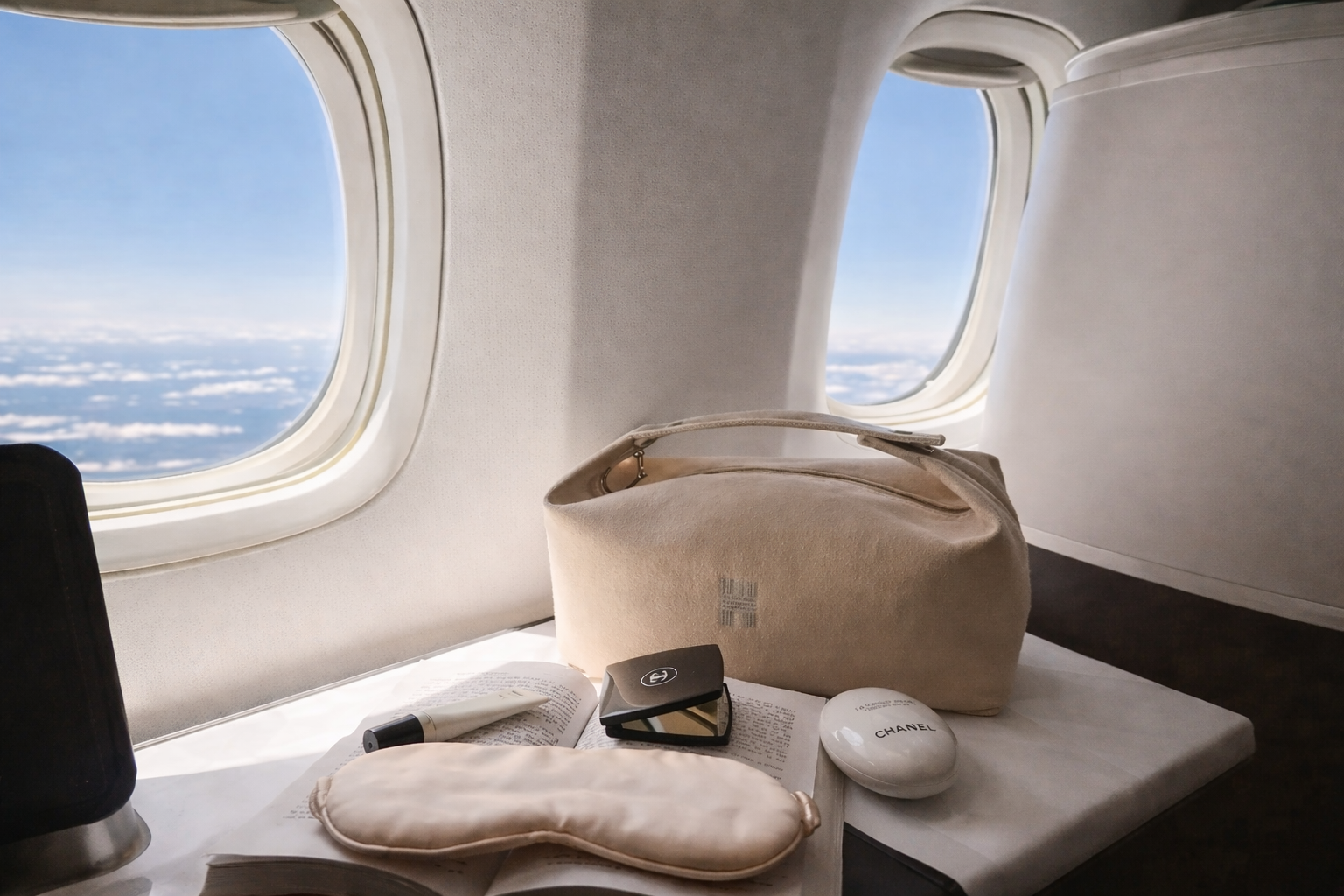
When your skin lives in a different time zone
For millions of people, frequent travel has become part of everyday life. Business trips, international flights, digital nomadism and weekend city breaks are now the norm. But while we often talk about jet lag as a problem for the body and mind, few people realize that the skin experiences jet lag too.
Dermatologists are increasingly observing a new type of skin condition among frequent travelers — skin that looks tired, dehydrated, irritated, and prematurely aged. This phenomenon is now being referred to as “jet lag skin”.
Why flying is harder on your skin than you think
Inside an airplane cabin, the environment is far from natural. The air is extremely dry, pressure levels are different from those on the ground, and the skin is exposed to prolonged dehydration.
During long-haul flights, the skin loses moisture faster than usual. At the same time, sleep disruption affects the body’s hormonal balance, which plays a crucial role in skin regeneration.
Another underestimated factor is UV exposure. At high altitudes, ultraviolet radiation is stronger, and passengers sitting near windows are exposed to more UV rays than they realize.
Over time, this combination of factors creates a specific pattern of skin stress that cannot be fully compensated by regular skincare routines.
A new risk group in modern skincare
Frequent travelers represent a growing and often overlooked group in skincare discussions. Pilots, flight attendants, business professionals, digital nomads, and influencers who constantly move between time zones are exposed to continuous skin stress.
Unlike traditional skin concerns, jet lag skin is not caused by genetics or age, but by lifestyle.
This makes it part of a broader trend: modern life is creating entirely new skin problems that did not exist a decade ago.
What jet lag skin actually looks like
Jet lag skin is not a medical diagnosis, but a recognizable pattern.
The most common signs include persistent dryness, dull complexion, increased sensitivity, dark circles, and accelerated appearance of fine lines. In some cases, frequent travelers also experience breakouts or inflammatory reactions, even if they normally have stable skin.
What makes jet lag skin unique is its cyclical nature. The skin partially recovers, only to be stressed again by the next flight.
Beyond hydration: why normal skincare is not enough
Most travelers assume that applying more moisturizer solves the problem. But dermatologists argue that jet lag skin requires a different approach.
The issue is not only dehydration, but also disruption of the skin barrier and circadian rhythm. When sleep cycles are constantly shifted, the skin’s natural repair processes become less efficient.
This explains why frequent travelers often feel that their skincare routine “stopped working”.
Jet lag skin as a symbol of modern lifestyle
Jet lag skin is more than a cosmetic issue. It reflects how modern lifestyles are reshaping our bodies in subtle ways.
In a world where mobility is celebrated, the skin becomes one of the first organs to reveal the hidden cost of constant movement.
As global travel continues to grow, jet lag skin may soon become one of the defining skincare challenges of the modern era.
The Dark Side of China’s Beauty Boom