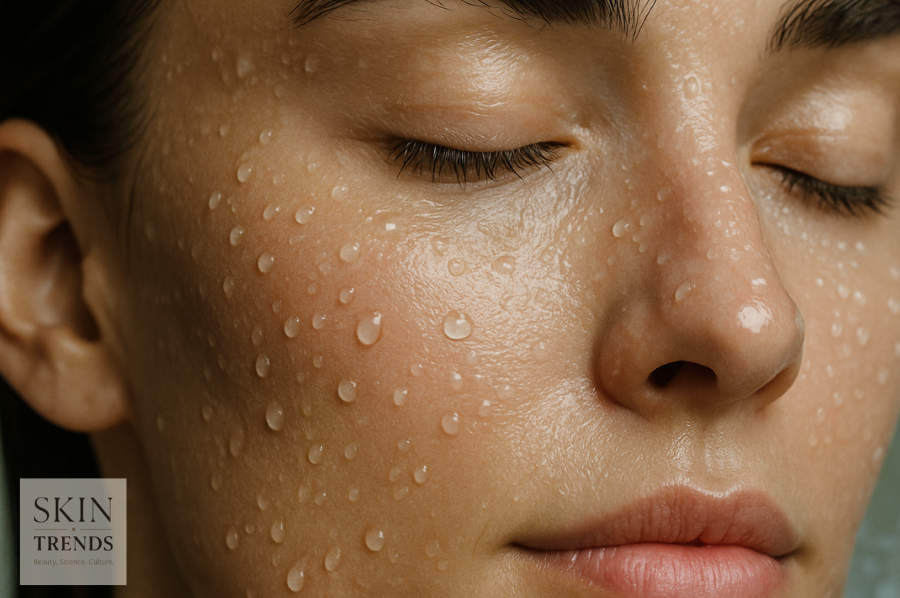
“Skin flooding” has quickly become one of the most talked-about beauty rituals on TikTok and within skincare communities. It promises instant hydration, a plump glow, and makeup that sits flawlessly on the skin. But what exactly is this technique, and does it truly work the way social media claims?
At its core, skin flooding is a method of layering several hydrating products — usually on damp skin — to saturate the outer layers of the skin with moisture before sealing everything in with a moisturizer. The goal is simple: give the skin more water, then prevent that water from evaporating.
And when done correctly, the results can be impressive.
What Skin Flooding Actually Does
The logic behind skin flooding is based on how the skin holds onto water. Humectants like hyaluronic acid, glycerin, panthenol, and amino acids attract moisture. When applied in thin layers, especially on slightly damp skin, they pull water into the stratum corneum (the skin’s outermost layer).
Then comes the most important step: sealing it all in with a moisturizer that contains lipids or occlusives. Without this final step, the moisture can evaporate just as quickly as it arrives — leaving the skin even drier.
When performed thoughtfully, skin flooding can help the complexion look softer, smoother, and more “alive.” It can calm that tight, dehydrated feeling, especially during winter, after travel, or after using more intense actives like retinoids or acids.
Who Skin Flooding Is Not For
The trend may look universal, but it isn’t.
People with oily or acne-prone skin often find that too many hydrating layers can feel heavy or lead to congestion. Those living in very dry climates may also struggle with the technique, because humectants need humidity in the air to work properly. Without it, they can draw water from the skin itself — the opposite of what you want.
Skin flooding is also not ideal for anyone with active breakouts, rosacea flare-ups, or skin that feels irritated. In these cases, fewer layers and a focus on barrier repair (ceramides, cholesterol, fatty acids) will be far more helpful.
The Myths You Shouldn’t Believe
Like any viral trend, skin flooding comes with its share of misinformation. One of the biggest myths is that more layers equal better results. In reality, the skin can only absorb so much. Too many layers can cause pilling, irritation, or even clogging.
Another popular misconception is that hyaluronic acid is essential for skin flooding. While HA is widely used, many people do just as well — or better — with glycerin, panthenol, beta-glucan, or ectoin. Hydration isn’t about one ingredient; it’s about balance.
There’s also the idea that skin flooding replaces barrier repair. It doesn’t. Hydrating the skin is not the same as restoring its structure. For damaged or compromised skin, lipids matter more than water.
And finally, some believe that skin flooding can solve dry patches overnight. It may soften them temporarily, but true dryness often points to a weakened barrier — something that hydration alone cannot fix.
How to Practice Skin Flooding Safely
The best version of skin flooding is gentle and intentional. Start with clean, slightly damp skin. Apply a thin hydrating toner or essence, followed by one or two lightweight hydrating serums. Finish with a moisturizer that contains emollients or occlusives to lock everything in.
It doesn’t have to be complicated. It also doesn’t need to happen every day. Two to four times a week is enough for most people, while those with oilier skin might prefer doing it only when dehydrated or during colder months.
The goal is to create a moment of comfort and replenishment — not overwhelm the skin.
The Bottom Line
Skin flooding can absolutely deliver that sought-after plump, dewy glow. But it works best when approached thoughtfully, with realistic expectations and an understanding of your skin type. It’s not a universal hack, nor is it a miracle. It’s simply a hydration technique — one that can feel luxurious when done correctly and unnecessary when overdone.
Listen to your skin. It will tell you when it needs more water, when it needs more lipids, and when it needs a simpler approach.
Read More: Dermaplaning