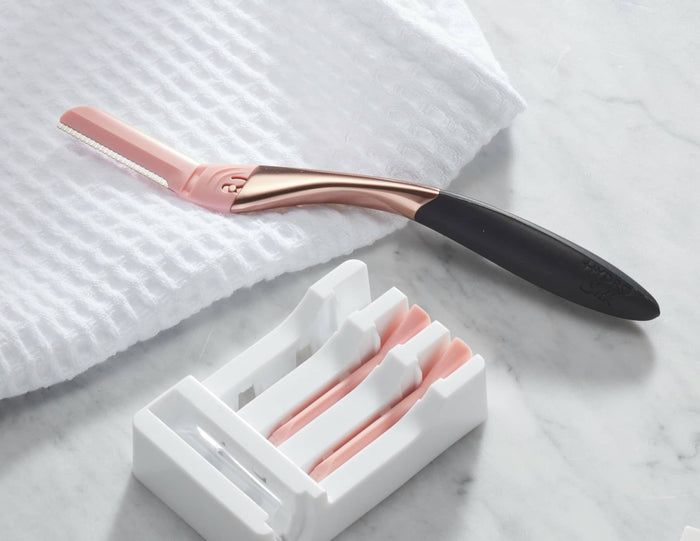
If you’ve spent even a minute on beauty TikTok lately, you’ve seen it: smooth, glowing skin revealed with a single swipe of a tiny blade. Dermaplaning has become one of the most popular at-home rituals, promising instant radiance and makeup that melts into the skin like silk.
But with popularity comes confusion — and not everyone is doing it safely.
Dermaplaning may look simple, almost relaxing, yet it’s still a technique that gently exfoliates the skin while removing peach fuzz. When done correctly, it can make your complexion look brighter, softer, and more even. When done incorrectly, it can lead to irritation, breakouts, or even long-lasting sensitivity.
So… is dermaplaning at home actually safe?
How Dermaplaning Really Works
At its core, dermaplaning is the act of sweeping a sterile blade across the skin at a shallow angle. It lifts away dead skin cells and fine hair, leaving the surface smooth and reflective. This is why makeup sits so beautifully afterward — there’s nothing in the way to catch or clump.
What dermaplaning doesn’t do is change your hair growth or make it thicker. That’s one of the biggest myths surrounding the trend.
Why People Love It
When performed with a gentle hand and proper technique, dermaplaning can instantly refresh the skin. It helps the complexion catch the light more evenly, reduces that dull, tired look, and can even make skincare absorb more effectively. It’s one of the few exfoliating rituals that gives visible results after just one session.
Where Things Can Go Wrong
Most of the problems come from rushing the process or using the wrong tools. A dull blade can tug instead of gliding; applying too much pressure can create micro-cuts; and using active ingredients right before or after can overwhelm the skin barrier.
The result? Redness, sensitivity, or a breakout that wasn’t there before.
Who Should Skip At-Home Dermaplaning
If you have active acne, rosacea, eczema, or your skin already feels irritated, this ritual is best left aside. These conditions make the skin more reactive, and the blade can only worsen inflammation.
How to Create a Safe Dermaplaning Ritual at Home
For most people with healthy, balanced skin, dermaplaning can be a gentle and enjoyable routine. The key is preparation and intention — clean skin, a clean blade, slow movements, and light pressure. Afterward, the skin loves calming formulas: a hydrating serum, a soothing moisturizer, and absolutely no exfoliating acids or retinoids for at least 24–48 hours.
Think of it as giving your face a reset, not a challenge.
How Often Should You Do It?
Once every 2–4 weeks is enough. Dermaplaning isn’t meant to be a weekly ritual; the skin needs time to restore itself between sessions.
So… Is Dermaplaning at Home Safe?
Yes — when it’s treated as a mindful, intentional beauty ritual instead of a quick trend hack.
The smoother skin, the glow, the softer makeup finish… they’re all real. But so is the need to respect the skin’s limits.
Listen to your skin, not just your feed. A beautiful ritual is one that leaves you glowing, not recovering.
Read More: The glass skin method